


Why Students in Eswatini Are Doing Better in Science
Across classrooms in Eswatini, a quiet change is reshaping how students learn science and mathematics, and the results are beginning to show.
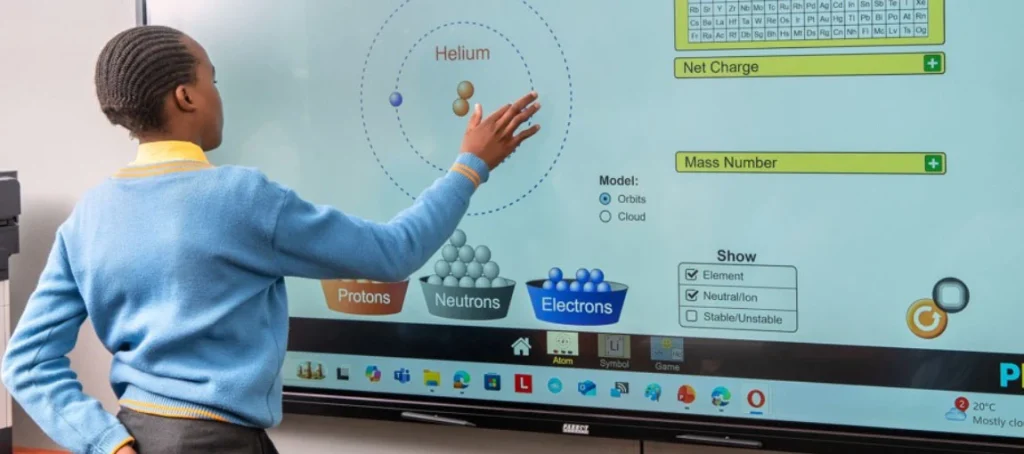
In 20 pilot schools, more than 2,000 students are now part of a new learning model that is shifting science lessons from fear to engagement.
Instead of the usual one way teaching, students now learn through group problem solving, discussions, and real time interaction with digital tools like tablets and interactive whiteboards.
But the biggest change is not only in the classroom technology. It is in the teachers.
Under the Progressive Mathematics Initiative and Progressive Science Initiative, teachers have undergone structured training that has significantly improved their understanding of the subjects they teach. This improvement is already reflecting in the classroom, where lessons are becoming clearer, more interactive, and easier for students to follow.
For years, science and mathematics performance in Eswatini has been a concern. Many students struggled with core subjects, and the gap between boys and girls in STEM learning was also visible. In some cases, girls performed lower, limiting their confidence and participation in science related fields.
The new approach is beginning to address that gap. Teachers are now being trained to use gender responsive methods, encouraging equal participation and building confidence among all students, especially girls who were previously left behind.
Still, the progress is not without challenges. Many schools, especially in rural areas, continue to face poor or unstable internet access. This limits how effectively digital tools can be used in teaching and learning, even where they are available.
Despite this, there is growing optimism. Plans are underway to expand internet access to more schools, which could strengthen the impact of the programme. There are also efforts to integrate this teaching model into teacher training institutions, ensuring that new teachers enter classrooms already equipped with these methods.
What is emerging in Eswatini is a possible shift in how science education is delivered. It shows that when teachers are better trained and classrooms are more interactive, students begin to understand subjects they once avoided.
For many students, science is no longer something to fear. It is now becoming something they can do.
