

When Nigeria’s Largest Cultural Celebration Began to Look Like a Campaign Arena
Argungu 2026: Fishing Festival or Political Storm?
In the ancient town of Argungu, culture has always been loud.
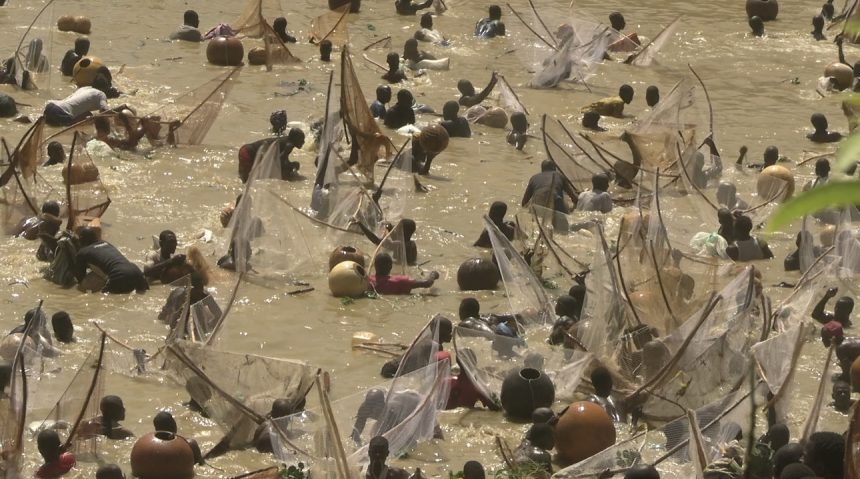
Drums echo across the riverbanks. Canoes slice through water in rhythmic competition. Fishermen plunge into the Matan Fada River with nothing but nets and hope. For generations, the Argungu Fishing Festival has stood as one of West Africa’s most enduring cultural spectacles — a celebration marking the end of the farming season and the beginning of fishing.
But in 2026, culture was not the only thing loud in Argungu.
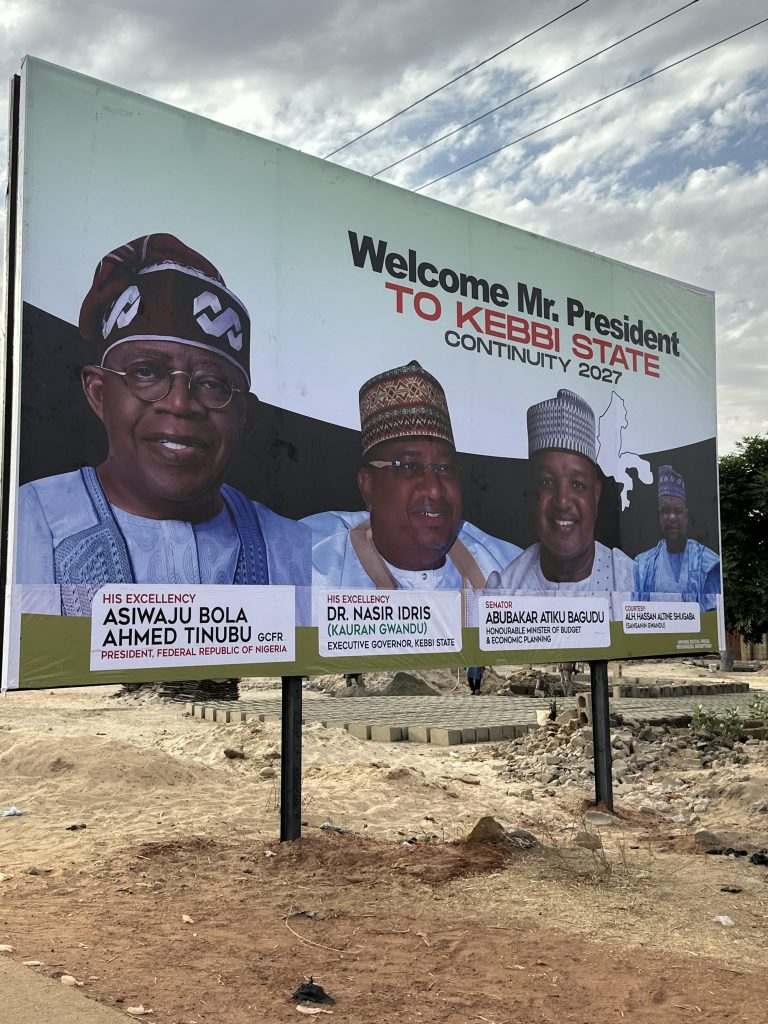
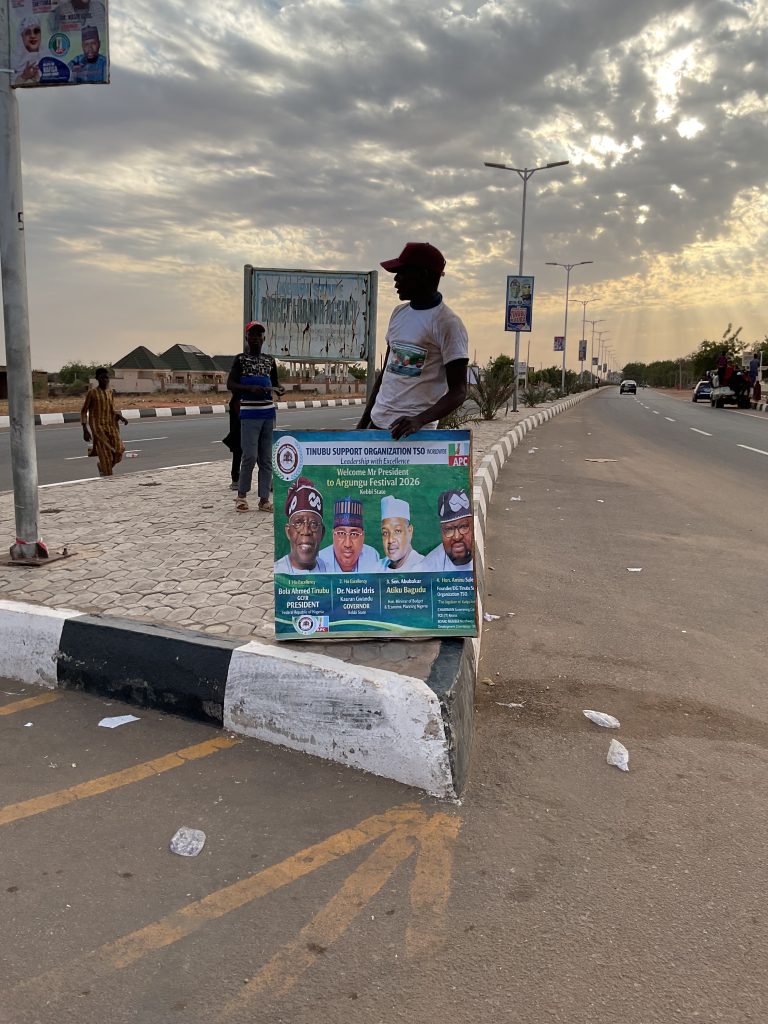
Long motorcades thundered into town. Armoured vehicles escorted political dignitaries. Heavily armed security personnel took strategic positions across the venue. Convoys stretched across highways leading from Birnin Kebbi to Argungu. Supporters waved placards. Campaign-style billboards lined the roads.
To some observers, this was a triumphant return — proof that stability had come back to a region long bruised by insecurity. To others, it felt like something else entirely.
It felt like a campaign.
A Festival with Deep Roots
The Argungu Fishing Festival is not new political theatre. Its origins date back to the 1930s, evolving into a national symbol of unity and tradition. It has survived colonial transitions, military regimes, democratic experiments, and economic upheavals. It has drawn tourists, diplomats, and cultural enthusiasts from across Nigeria and beyond.
Yet it has also suffered setbacks.
Persistent insecurity in parts of northern Nigeria forced several cancellations in recent years. Armed banditry and extremist violence in the wider North-West region made large public gatherings risky. The absence of the festival became symbolic of something larger — a state struggling to guarantee safety.
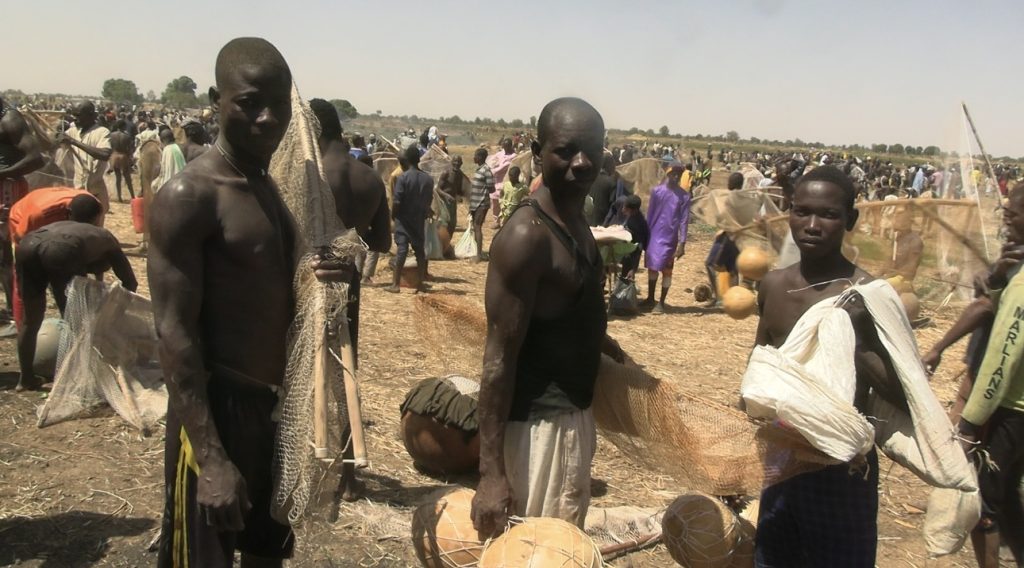
So when President Bola Tinubu attended the 2026 edition, the optics were powerful. In his remarks, he described the revival of the festival as evidence of restored stability and normalcy. His presence signaled federal endorsement, reassurance, and perhaps political ownership of the festival’s return.
It was a compelling narrative: insecurity disrupted tradition; this administration restored it.
But politics is rarely just about symbolism. It is about timing.
The INEC Calendar and the Politics of Presence
Just days before the festival, the Independent National Electoral Commission released the official timetable for the 2027 general elections. The schedule detailed voter registration windows, party primaries, campaign periods, and procedural milestones that quietly signal the beginning of Nigeria’s next political season.
In Nigerian politics, once INEC releases a timetable, the race begins — formally or informally.
The president’s visit to Kebbi State could not have come at a more politically strategic moment. Kebbi is part of the North-West, a region that has historically played a decisive role in presidential elections. Securing or consolidating support there is not optional; it is essential.
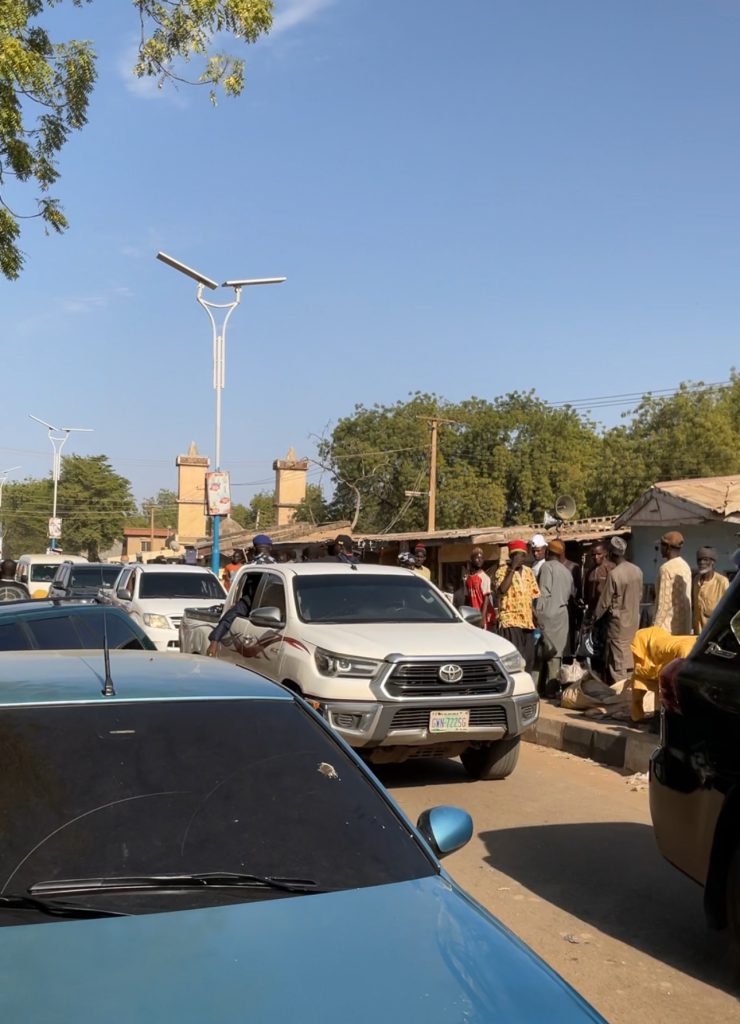
Against that backdrop, Argungu transformed — at least visually — from a purely cultural gathering into a stage layered with electoral undertones.
Thousands of supporters lined the roads. Billboards bearing political messages were visible along key routes. The Kebbi State governor, reportedly seeking re-election, stood prominently beside the president. Chants echoed through the festival grounds, invoking political slogans alongside cultural celebration.
For a first-time visitor unfamiliar with the festival’s history, it would not have been unreasonable to mistake the event for a carefully choreographed political rally wrapped in cultural attire.
The Security Paradox
Perhaps the most striking feature of the 2026 festival was not the fishing competition, but the security architecture surrounding it.
Armoured personnel carriers. Military patrols. Strategic deployment of armed officers. High-alert posture.
On one hand, such security presence could be interpreted as necessary prudence. Large gatherings in volatile regions require protection. The state has an obligation to prevent tragedy.
On the other hand, the optics were paradoxical.
If the festival’s return is proof of restored stability, why did it require extraordinary layers of military visibility? Stability that depends on overwhelming force may signal control — but not necessarily peace.
This contradiction sits at the heart of the 2026 Argungu debate.
Nigeria continues to battle insecurity across multiple fronts — banditry in the North-West, extremist violence in parts of the North-East, communal clashes in the Middle Belt, and rising urban crime. Reports of deadly attacks have not ceased. Communities continue to experience displacement and fear.
Against that national backdrop, the image of heavily guarded convoys celebrating “normalcy” becomes politically loaded.
Is stability episodic — activated for major events — or systemic and sustained?
For the people of Argungu, what remains after the dignitaries depart? Does the infrastructure improve? Are local security threats permanently reduced? Do economic opportunities expand? Or does the spectacle dissolve into memory?
Culture as Political Currency
Nigeria’s political class has long understood the value of cultural platforms. Festivals offer ready-made crowds, emotional symbolism, and regional pride — all of which can be leveraged to reinforce political legitimacy.
Cultural events provide what campaign rallies often lack: authenticity. They are not artificially assembled; they are organic traditions. When political actors align themselves with these traditions, they tap into collective identity rather than partisan loyalty.
In 2026, Argungu appeared to function as both heritage celebration and political signal.
The signal was subtle but unmistakable:
“We restored this.”
“We are present.”
“We are strong.”
“We control the terrain.”
In political communication, presence is power. To be physically present in a region — especially one associated with insecurity — is to project authority.
Yet presence can also blur boundaries.
When does cultural endorsement become political mobilization?
When does celebration become campaign choreography?
These are not accusations. They are democratic questions.
The Northern Equation
The North remains central to Nigeria’s electoral arithmetic. No serious presidential contender can ignore it. Over decades, political strategies have been built around cultivating northern alliances, religious networks, traditional institutions, and elite coalitions.
In that sense, Argungu may represent more than a festival revival. It may represent strategic positioning.
Political analysts often describe Nigeria’s evolving system as increasingly tilted toward dominant-party consolidation. While opposition parties remain active, the ruling party’s expanding footprint in several states has sparked quiet concerns among democracy advocates about competitive balance.
Is Nigeria moving toward a de facto one-party dominance structure?
That question is uncomfortable — but not unfounded.
Dominant-party systems are not necessarily authoritarian. They can exist within democratic frameworks. However, they raise concerns about weakened opposition, reduced policy competition, and shrinking space for dissent.
When cultural spaces increasingly mirror political stages, observers begin to wonder whether the boundaries between state, party, and public life are gradually dissolving.
Development Beyond the Spectacle
Lost in the political analysis is the most important constituency: the people of Argungu.
For them, the festival is not abstract political symbolism. It is economic opportunity. Hotels fill up. Traders sell goods. Artisans display crafts. Transport operators benefit. Local vendors see increased income.
But sustainable development is not measured in a weekend.
Does the federal spotlight translate into long-term infrastructure investment?
Are local fishermen receiving modern equipment or ecological support?
Is tourism infrastructure being upgraded to make Argungu a year-round destination?
Are young people in Kebbi State seeing new employment pathways?
If the answer to these questions is yes, then political presence may have tangible dividends.
If not, then the festival risks becoming performative — a moment of spectacle rather than structural transformation.
The Narrative of Normalcy
President Tinubu described the festival as a testament to stability’s return. From a communications standpoint, this narrative is powerful. It reframes insecurity from an ongoing crisis to a conquered challenge.
But narratives must compete with lived realities.
Across parts of northern Nigeria, armed groups remain active. Communities still report attacks. Rural residents often depend on informal self-defense structures in the absence of consistent state protection.
If stability is selective — concentrated around major events and urban centers — then the claim of “normalcy” becomes contested.
Normalcy is not the absence of a single disruption. It is the sustained absence of fear.
The Bigger Democratic Question
The 2026 Argungu Fishing Festival forces Nigeria to confront a broader democratic tension:
Can cultural spaces remain politically neutral in a hyper-competitive electoral environment?
Or are they inevitably absorbed into political contestation?
Democracy thrives on pluralism — multiple parties, competing ideas, open civic space. When political branding becomes omnipresent — on highways, at festivals, within traditional gatherings — it risks shrinking the symbolic space for non-partisan civic life.
This does not mean political leaders should avoid cultural events. On the contrary, engagement with heritage is healthy. But balance matters.
The difference between participation and politicization is subtle — yet significant.
What Happens Next?
As Nigeria moves closer to 2027, more cultural gatherings will likely carry political undertones. Governors seeking re-election will share platforms with federal actors. Presidential hopefuls will attend regional festivals. The choreography of presence will intensify.
Argungu may simply have been the opening scene.
The true test lies ahead:
Will the security improvements seen during the festival endure beyond it?
Will economic gains be institutionalized?
Will opposition voices retain equal visibility in northern states?
Will cultural celebrations in 2027 feel less politically charged — or more?
For now, Argungu stands at a crossroads.
It remains Nigeria’s most iconic cultural gathering — rich in history, pride, and identity. But in 2026, it also became a mirror reflecting the country’s political anxieties, electoral calculations, and democratic uncertainties.
Fishing nets were cast into the river.
But political lines were cast as well.
And as Nigeria edges toward another election cycle, one cannot help but ask:
Was Argungu simply the revival of a cherished tradition —
Or the quiet launch of a campaign season dressed in cultural colors?