



The three-day visit brought together senior government officials and leading Swedish technology and infrastructure companies
Zamfara Seeks Swedish Tech Solutions to Tackle Insecurity, Boost Development
Between January 11 and 15, officials from Nigeria’s Zamfara State travelled thousands of kilometres from northwest Nigeria to Sweden on a mission they believe could help reshape the state’s future.
The three-day visit brought together senior government officials and leading Swedish technology and infrastructure companies, as Zamfara looks to leverage innovation to confront some of its most persistent challenges — insecurity, illegal mining, and weak transportation systems — problems that have plagued the state and much of northwest Nigeria for more than a decade.
During meetings in Sweden, Zamfara officials visited global technology firms Ericsson and Scania, as well as Epicenter Stockholm — a leading innovation hub — to explore how advanced communication networks, digital transport systems, and tech-driven solutions could be adapted to the state’s unique challenges.
At the heart of the discussions was how advanced communication technology, particularly 5G networks, surveillance systems, and digital transport solutions, could be deployed in a region where vast ungoverned spaces, rugged terrain, and poor infrastructure have long hindered effective security responses.
A region trapped by insecurity
Zamfara lies in Nigeria’s northwest, a region that has become the epicentre of armed banditry, mass kidnappings, and rural violence. What began years ago as local disputes between farmers and pastoralists gradually evolved into well-armed criminal networks that now control large swathes of territory across Zamfara, Katsina, Kaduna, Sokoto, and parts of Niger State.
These armed groups regularly raid villages, abduct residents for ransom, rustle cattle, and ambush travellers along major highways. Entire communities have been displaced, schools have shut down repeatedly, and farming — the mainstay of the local economy — has been severely disrupted.
For Zamfara in particular, the security crisis is deeply intertwined with illegal mining. The state is rich in mineral deposits, including gold and other critical minerals, but weak regulation and poor oversight have allowed criminal syndicates to exploit these resources. Armed groups tax illegal miners, control access to mining sites, and use the proceeds to finance weapons and recruitment, fuelling a cycle of violence that has proven difficult to break.
Security agencies have often struggled to operate effectively in the region. Many affected communities are remote, with limited road access and little or no mobile network coverage. In some areas, residents cannot place distress calls during attacks, while response teams face long delays reaching scenes of violence.
It is this gap — between threat and response — that Zamfara officials say technology could help close.
Looking to technology for answers

During meetings in Sweden, Zamfara’s delegation explored how advanced communication systems could improve security coordination, emergency response, and surveillance in hard-to-reach areas.
Officials believe that expanding reliable network coverage could enable real-time communication between communities and security agencies, support early-warning systems, and allow for faster deployment of emergency services during attacks.

Beyond security operations, improved connectivity is also seen as a tool for governance. Digital mapping, data collection, and monitoring systems could help authorities better understand where illegal mining is taking place, track movements in forested areas, and improve oversight of mineral resources that have long been exploited outside formal channels.
The delegation’s visit to global telecom giant Ericsson focused on how modern network infrastructure can function even in difficult terrains, where conventional communication systems have failed. Officials say such solutions could be critical in a state where insecurity thrives partly because criminals operate beyond the reach of government presence.
Mining, youth unemployment and economic recovery
Zamfara’s mineral wealth has long been described as both a blessing and a curse. While the state holds some of Nigeria’s most significant deposits of gold and other critical minerals, years of insecurity and informal mining have prevented the sector from delivering meaningful benefits to local communities.
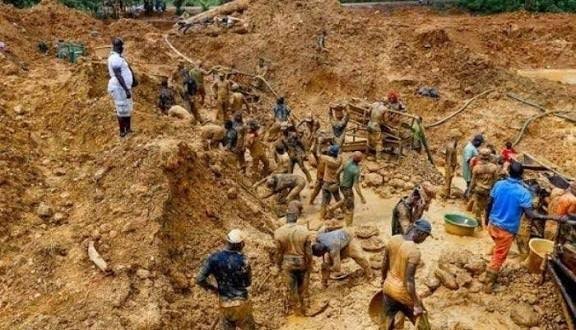
State officials argue that formalising mining operations through better monitoring, digital tracking, and transparent licensing could help cut off revenue streams to criminal groups, while creating legitimate jobs for young people who are often drawn into illegal mining due to lack of alternatives.
Youth unemployment remains high across northwest Nigeria, exacerbating insecurity. Many young men, with few economic opportunities, are vulnerable to recruitment by armed groups that promise income and protection.
Authorities hope that combining improved security with regulated mining and digital oversight can boost state revenues, attract investment, and generate employment — reducing the economic desperation that feeds violence.
Transport as both challenge and opportunity
Insecurity in Zamfara is also worsened by weak transportation infrastructure. Poor road networks limit access to rural communities and slow down security operations. In some cases, military and emergency responders rely on outdated vehicles and informal transport systems to navigate difficult terrain.

During their visit, Zamfara officials engaged with Swedish transport manufacturer Scania to explore how modern transport solutions could support both public mobility and security logistics.
Digital transport systems, including e-ticketing, fleet tracking, and data-driven route planning, are being considered as ways to improve efficiency and accountability in public transportation. Officials believe that better-managed transport networks could also support economic activity, linking farmers to markets and improving access to healthcare and education.
For a region where isolation has often allowed insecurity to fester unnoticed, improved transport connectivity is seen as a vital part of long-term stability.
Swedish companies eye long-term partnerships
For Swedish firms such as Ericsson and Scania, the discussions signal a shift away from short-term contracts towards longer-term partnerships in emerging markets.
Industry representatives say collaboration with Nigerian states like Zamfara reflects growing interest in co-creating solutions tailored to local challenges, rather than simply exporting off-the-shelf products.
Such partnerships, they argue, allow technology companies to make tangible social impact while expanding their presence in Africa’s largest economy — a country where infrastructure gaps remain significant but opportunities are vast.
Cautious optimism at home
Back in Zamfara, expectations remain cautious. Residents have heard promises before, and years of military operations and policy initiatives have yet to deliver lasting peace.
Analysts warn that technology alone cannot solve insecurity rooted in poverty, governance failures, and weak institutions. Without sustained political commitment, community engagement, and accountability, new systems risk becoming underused or mismanaged.
Still, many see the Sweden visit as a sign that authorities are exploring new approaches after years of limited success.
For communities living under the shadow of armed groups, the hope is that decisions made in conference rooms thousands of miles away will translate into practical change — faster responses to attacks, safer roads, regulated mining, and, ultimately, a return to normal life.
Whether advanced technology can help deliver that outcome remains to be seen. But for Zamfara, grappling with some of Nigeria’s most complex security challenges, the search for solutions has become both urgent and unavoidable.