


Around 100 Migrants Killed in Deadly Ceuta Border Rush, Officials Say
Around 100 migrants died during last week’s mass rush into the Spanish enclave of Ceuta from Morocco, according to Ceuta’s regional leader, Juan Jesús Vivas, who described the incident as one of the deadliest migration tragedies on Europe’s southern border in recent years.
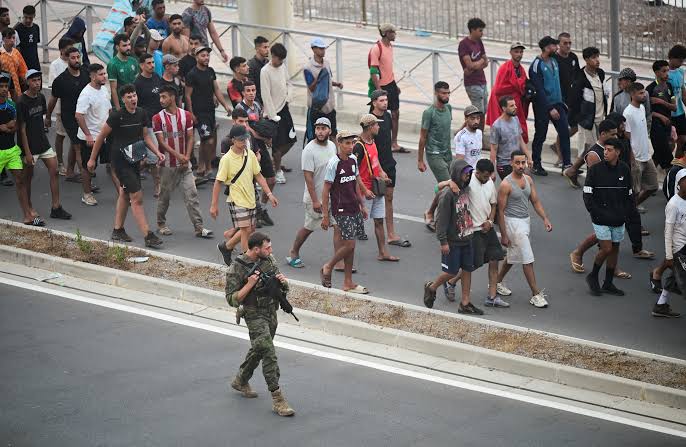
Addressing members of the European Parliament on Thursday, Vivas said the deaths occurred as tens of thousands of migrants attempted to cross into the Spanish territory during an unprecedented surge. He also disclosed that between 3,000 and 5,000 migrants remain in Ceuta, placing severe pressure on the enclave’s reception facilities and public services.
Spanish authorities have reported that approximately 72,000 migrants entered Ceuta during the mass crossing, making it one of the largest irregular entries into European Union territory in recent years. While most have since been returned to Morocco, thousands remain, including a significant number of unaccompanied minors who cannot be immediately repatriated under existing legal frameworks.
The incident has reignited debate within the European Union over border security and migration policy. EU Migration Commissioner Magnus Brunner said the bloc should use all available diplomatic tools, including visa and trade policies, to strengthen cooperation with Morocco on migration management and migrant returns.
Morocco has denied allegations that it deliberately relaxed border controls to facilitate the crossings. However, it has pledged to cooperate with Spain in identifying and repatriating unaccompanied Moroccan minors following instructions from King Mohammed VI, according to the country’s state news agency.
The tragedy has also renewed scrutiny of Europe’s migration strategy and the humanitarian risks faced by people attempting irregular crossings into the EU. Human rights organisations have called for an independent investigation into the deaths and urged European and Moroccan authorities to ensure that border enforcement complies with international humanitarian and refugee law.
