


Months-Long Blackout Pushes Abaji Residents, Businesses to the Brink
By Habibat Muhammad Sani
At about 2 p.m. on a sweltering afternoon in Abaji Area Council, Fatima Usman sat inside her home fanning herself, her eyes fixed on a refrigerator that had become little more than furniture.
Not long ago, the steady hum of the appliance and the clink of cold bottles defined her daily business. Today, survival depends on buying ice blocks.
“This light issue is affecting us,” she told Ideko News Africa. “I sell soft drinks, but without electricity, my drinks won’t be cold. Customers don’t want hot drinks.”
To keep her business running, Ms Usman now spends about N1,000 every day on ice blocks—an expense that continues to eat into her already slim profit margins.
“It is painful to have a fridge and still not be able to use it,” she said. “There is no light, and it feels useless. If it stays unused for too long, it could even get damaged.”
The greater loss, however, is the business she was forced to abandon altogether.
“I used to sell kunu, but I stopped,” she said. “Kunu spoils easily. Many times I prepared it and it got spoiled because there was no electricity. From that business alone, I made at least N2,000 profit every day. If you calculate that over a month, you will understand the loss.”
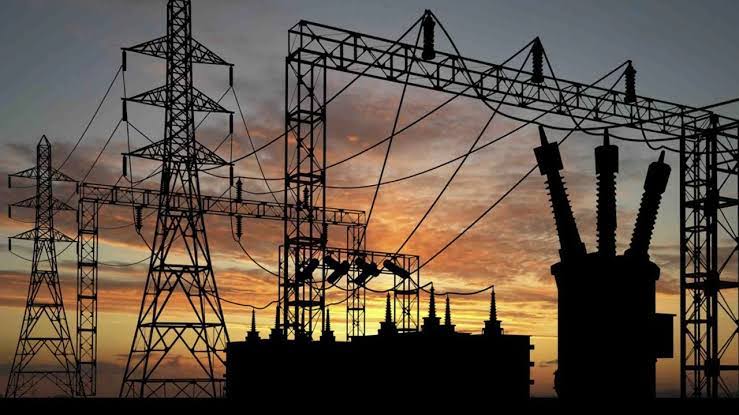
Her story reflects a growing crisis unfolding across Abaji, where months of electricity outages have disrupted livelihoods, increased the cost of living, and pushed many small businesses to the edge.
For residents and business owners alike, the prolonged blackout has transformed everyday necessities such as water, food preservation, communication, and education into costly challenges, forcing many to depend on generators, fuel, and alternative energy sources to survive.
Businesses Running on Survival Mode
Across Abaji, small and medium-sized businesses are increasingly relying on expensive alternatives just to remain operational.
For Yusuf Islamiyat, who runs a school that combines Islamic and Western education, the absence of electricity has turned routine operations into a daily struggle.
“Water is a major problem,” she said. “The school has a water system, but because there is no electricity, we cannot sustain it with petrol every day. Sometimes we have to buy water instead. Even when you have money, getting water is difficult because the sellers themselves are affected by the power outage, and petrol is expensive.”
According to her, the school spends at least N1,500 daily on water alone.
To cope, she installed a solar power system—but only by taking on debt.
“I had to install solar on credit,” she said.
Even then, operational challenges persist.
“Before, we printed our examination questions ourselves. Now we have to take them outside. What used to cost about N150,000 has almost doubled to N300,000,” she explained.
When the school attempts to handle printing internally, fuel costs quickly become overwhelming.
“Sometimes I buy N10,000 worth of fuel, and before you know it, it is finished,” she added.
High Demand, Shrinking Profits
While some businesses are struggling to survive, others are seeing increased demand—but at a much higher operating cost.
David Peter, who runs a phone-charging business, said the prolonged outage has forced him to rely entirely on petrol-powered generators.
“Before, we had two options—electricity or generator. Now, it is only generator,” he said.
According to him, he spends between N12,000 and N15,000 daily on fuel.
“Sometimes the shop is full, and I have to tell customers to take their phones back because there is no space,” he said.
To offset the rising cost of operations, he has doubled his prices.
“Before, it was N100 per phone. Now it is N200. Charging power banks has increased from N200 to N300.”
Another charging business owner, Anas Ahmad, who uses a gas-powered generator, said the situation remains unsustainable.
“It is always better when there is electricity because you have options,” he said. “I will be the happiest person if Abaji finally gets stable power.”
Rising Cost of Basic Living
Beyond businesses, residents say the prolonged blackout has significantly increased the cost of basic necessities, particularly access to water.
Ms Usman recalled that when electricity was stable, some residents benefited from free community water initiatives.
“Some philanthropists used to provide free water every Friday,” she said. “Now they have stopped because there is no electricity.”
As a result, prices have surged.
“A rubber of water used to cost N20. Now a bigger one costs N80. If you want cheaper water, you have to walk a long distance,” she added.
For Abdulkareem Lukman Dida, a resident and electrician, the impact has been both economic and personal.
“When there was electricity, borehole water was free in my area,” he said.
Today, water supplied by vendors can cost as much as N1,200.
The blackout has also affected his livelihood.
“I am an electrician, but there is no work,” he said. “People are no longer installing electrical equipment.”
According to him, the outage has also limited access to information and strained healthcare services.
“We cannot easily watch the news or charge our devices. Even our primary healthcare centre is affected,” he said.
Another resident, Fadila Idris, described the daily burden of keeping her phone powered.
“I use an iPhone, and you know how quickly the battery can run down,” she said. “Every day I have to go somewhere to charge my phone. It is exhausting.”
A Pattern of Infrastructure Failure
Community leaders and residents attribute the prolonged outage partly to repeated vandalism of electricity infrastructure.
In March, the Chairman of Abaji Area Council, Abubakar Umar Abdullahi, announced plans to transition the council from reliance on the Abuja Electricity Distribution Company (AEDC) to a solar-powered solution.
The decision, he said at the time, followed repeated acts of sabotage.
“Three times we bought cables and installed them, and they were vandalised,” he said in a video message.
He assured residents that work on the solar project would begin “by next week.”
More than two months later, residents say there has been no visible implementation or official update.
Efforts to reach the chairman for clarification on the status of the project and a possible timeline for its completion were unsuccessful at the time of publication.
A National Crisis Reflected in Abaji
The situation in Abaji mirrors a broader electricity challenge facing communities across Nigeria.
Unreliable power supply continues to place immense pressure on households and businesses, forcing millions to depend on generators and alternative energy sources.
The crisis is driven by a combination of aging infrastructure, inadequate investment, energy theft, vandalism, gas supply constraints, and weaknesses within the country’s transmission and distribution networks.
Nigeria remains one of the countries with the largest electricity access deficits in the world. According to the World Bank’s 2025 Energy Progress Update, approximately 86.8 million Nigerians still lack access to electricity, the highest number recorded by any country globally.
Even among those connected to the national grid, supply remains inconsistent. Data from the World Bank Atlas of Sustainable Development indicates that Nigeria continues to experience frequent and prolonged power outages, with rural and peri-urban communities such as Abaji among the hardest hit due to weak distribution infrastructure and limited network expansion.
The World Bank further estimates that Sub-Saharan Africa accounts for the majority of the global population without electricity, with Nigeria, the Democratic Republic of Congo, and Ethiopia representing a significant share of global energy poverty.
Energy insecurity is further compounded by vandalism of power infrastructure, gas shortages, and inadequate transmission capacity, all of which contribute to recurring grid instability and nationwide blackouts.
Reuters has also reported that Nigeria’s electricity sector continues to suffer repeated disruptions caused by structural weaknesses, aging infrastructure, and attacks on transmission assets.
The economic consequences are significant.
The Nigerian Independent System Operator (NISO) estimates that the country loses approximately N40 trillion annually as a result of unreliable electricity supply through lost productivity, reduced business output, and heavy dependence on self-generated power.
In 2024, Minister of Power Adebayo Adelabu disclosed that Nigerians spent an estimated N16 trillion in 2023 on petrol, diesel, and alternative electricity generation—far exceeding the revenue generated by the formal power sector.
The International Monetary Fund (IMF) has also identified inadequate infrastructure, including unreliable electricity, as a major constraint on productivity, private sector growth, and economic development in Nigeria.
Expert Warns of Deepening Economic Consequences
Yahya Musa Soje, a community development and public infrastructure expert, warned that the prolonged outage in Abaji is steadily eroding livelihoods and weakening the local economy.
“The reality is disheartening,” he said. “When an entire community depends almost completely on generators and alternative sources of power, it exposes serious failures in governance and infrastructure.”
According to him, the impact on small businesses is immediate and measurable.
“Businesses are gradually shutting down. Some operators are relocating, while others are taking loans to install solar systems simply to remain operational,” he said.
He argued that the crisis highlights a growing concern among Nigerians who effectively pay twice for electricity.
“People pay electricity tariffs, yet they still spend heavily on fuel to power their homes and businesses. This is neither sustainable nor fair, especially for low-income households and small business owners,” he said.
Soje warned that if the situation persists, communities such as Abaji could experience declining investment, reduced business activity, and rising unemployment.
“If this continues, we will witness a gradual contraction of economic activity in these communities,” he said.
Looking ahead, he projected significant challenges for Nigeria’s power sector if comprehensive reforms are not implemented.
“The sector risks becoming increasingly irrelevant as more households and organisations migrate to solar energy. That trend is already visible,” he noted.
While he acknowledged that solar projects could provide temporary relief, he questioned their ability to meet long-term demand.
“Solar can help, but it may not be sufficient for a rapidly growing community. The priority should be restoring reliable grid electricity,” he said.
He also stressed the need to protect critical infrastructure from vandalism.
“Without adequate security, any effort to restore power will only provide temporary relief. Infrastructure protection must be treated as a priority,” he added.
To address the problem, Soje called for greater collaboration between local authorities and security agencies.
“A joint security arrangement involving Abaji and neighbouring Kwali Area Council would go a long way in protecting electricity facilities and reducing cable theft,” he said.
For residents such as Fatima Usman, however, solutions cannot come soon enough.
Every day without electricity means another day of higher costs, lost income, and growing uncertainty.
“Things were easier when there was light,” she said. “We just want electricity to come back.”

The lack of electricity in abaji is something we are getting used to it already,your daily routine is spending 500naira on charging,during fasting it was something else cause how will you fast from morning till evening but you don’t even get cold water to break that fast….we just want that electricity back😣