


Nigeria Sack Super Falcons Coach After First World Cup Qualification Failure in 35 Years
The Nigeria Football Federation has ordered Super Falcons head coach Justine Madugu and his technical crew to step down with immediate effect, following the team’s disappointing campaign at the 2026 Women’s Africa Cup of Nations and its failure to qualify for the 2027 FIFA Women’s World Cup.
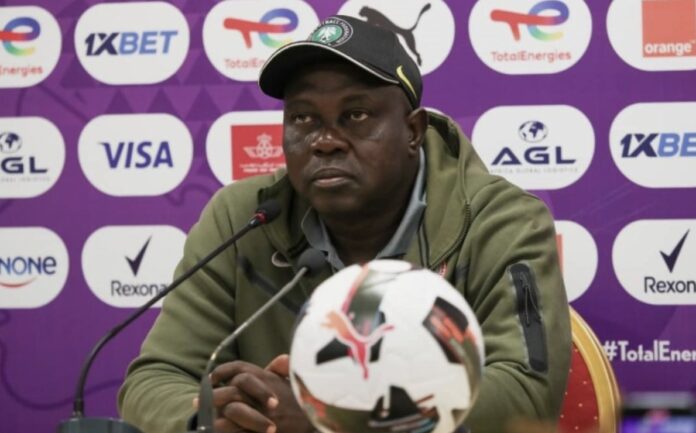
The decision was announced on Monday, shortly after Nigeria’s World Cup hopes were ended by South Africa, which defeated the Falcons 2–1 in the qualification play-off.
The setback came after Nigeria had already suffered a major disappointment at the WAFCON. The defending champions were eliminated in the quarter-finals by Cameroon, losing 1–0. As a result, they failed to reach the semi-finals for the first time in the tournament’s history and lost their automatic route to the 2027 World Cup.
Nigeria were then given another opportunity to qualify through the play-offs but could not overcome South Africa.
The failure represents a particularly significant setback for the Super Falcons, who had qualified for every previous Women’s World Cup since the inaugural tournament in 1991.
Nigeria’s absence from the 2027 edition in Brazil would therefore end a run of nine consecutive Women’s World Cup appearances if they fail to qualify through any remaining route. PUNCH described the latest failure as the first time the Falcons have missed the World Cup since the competition began.
The Falcons entered the 2026 WAFCON as 10-time African champions and defending champions, making their early elimination even more unexpected. PUNCH had previously highlighted concerns over the team’s preparations, including a lack of sufficient competitive friendlies ahead of the tournament.
Alongside the decision to remove the technical crew, NFF President Ibrahim Gusau has ordered a wider investigation into the recent poor performances of Nigeria’s national teams, with particular attention to the Super Falcons’ failure to qualify for the World Cup.
The committee has been given two weeks to investigate the direct and remote causes of the poor results and submit its report to the federation.
Madugu had earlier apologised to Nigerians after the World Cup qualification failure, accepting responsibility for the team’s disappointing results.
The decision also comes amid broader questions about Nigeria’s national-team football. The Super Eagles have already missed the 2026 men’s World Cup, while the NFF has faced increasing pressure to address what officials have described as the need to rebuild the country’s national teams.
Madugu’s departure brings an end to his spell leading the Super Falcons after he was involved with the team’s technical setup for several years. He was appointed alongside Edwin Okon as part of an NFF restructuring of the Falcons’ technical crew in 2021.
His dismissal comes despite Nigeria’s strong historical record in women’s football. The Falcons remain Africa’s most successful women’s national team, but their latest failure has exposed concerns over preparation, technical direction and the federation’s long-term planning.
The NFF must now find a new technical leadership structure while also implementing the recommendations of its investigation.
For a country that has traditionally regarded the Super Falcons as one of its most dependable national teams, missing the 2027 World Cup represents more than a single tournament failure — it marks the end of one of the longest qualification streaks in international women’s football.
