


Nigeria, UN push shift from emergency aid to long-term development at Abuja workshop
Nigeria’s Federal Government and the United Nations have reaffirmed their commitment to transitioning from short-term humanitarian assistance to sustainable development, as key stakeholders convened in Abuja for a Humanitarian Transition Workshop.
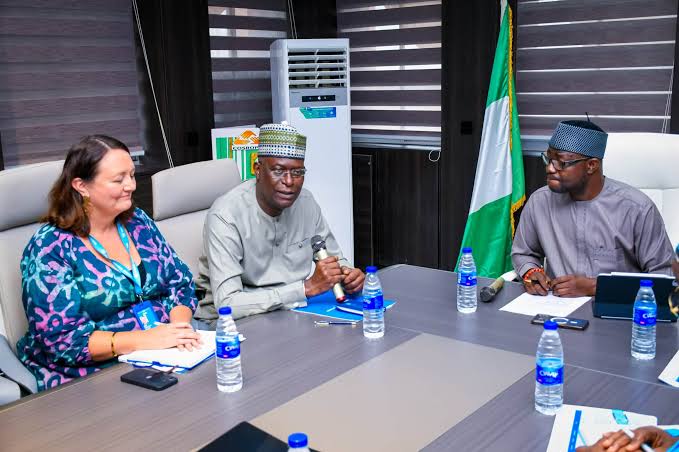
At the opening session, the Honourable Minister of the Federal Ministry of Humanitarian Affairs and Poverty Reduction stressed the need for a coordinated national framework that moves beyond emergency response toward durable solutions addressing poverty, displacement, and vulnerability.
The Minister highlighted that Nigeria faces complex humanitarian challenges driven by conflict, climate shocks and economic pressures, and emphasized that government policy is now focused on “linking relief to recovery and development.” This approach, he noted, aims to strengthen national systems, reduce dependency on aid, and empower affected communities through long-term interventions. The Ministry also reiterated its commitment to deepening collaboration with international partners, particularly the United Nations, to improve coordination and deliver sustainable outcomes.
In his remarks, the United Nations Resident and Humanitarian Coordinator in Nigeria, Mohamed Malick Fall, underscored the urgency of reforming the humanitarian response model in the country. He noted that the traditional aid system—largely dependent on external funding—is becoming increasingly unsustainable amid rising needs and shrinking global resources.
Fall emphasized that the humanitarian transition agenda is designed to shift leadership and ownership progressively to national institutions while integrating humanitarian, development and peacebuilding efforts. He described the workshop as a critical platform for aligning stakeholders around a shared strategy that prioritizes resilience, local capacity, and long-term stability.
The UN coordinator also commended the Nigerian government’s growing role in funding and leading humanitarian interventions, pointing to recent efforts to strengthen early warning systems, disaster preparedness, and food security responses.
Both speakers agreed that the transition process requires stronger partnerships across government agencies, development partners, civil society, and affected communities. They called for increased investment in local systems and data-driven planning to ensure that humanitarian gains are not lost but instead translated into sustainable development outcomes.
The Humanitarian Transition Workshop is part of ongoing efforts by Nigeria and the United Nations to reposition the country’s response to crises—particularly in conflict-affected regions such as the North-East—toward a model that reduces aid dependency and promotes inclusive growth and resilience.
