


Opposition coalition proposes one-term government to reset Nigeria ahead of 2027
Nigeria’s opposition is beginning to move beyond the question of who should challenge President Bola Tinubu in 2027 and towards a more unusual proposal: a possible single four-year government of national competence to carry out a national reset.
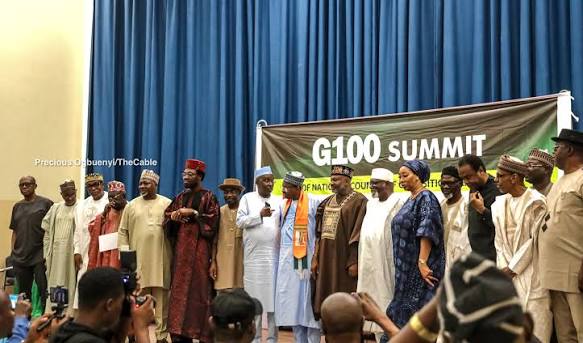
The proposal was unveiled on Monday at an opposition summit organised by the G100 at the Shehu Musa Yar’Adua Centre in Abuja, with representatives of the ADC, APM, NDC, PDP, PRP and SDP in attendance.
Presenting the framework, former APC chieftain Salihu Moh. Lukman said the proposed government would be based on competence, integrity, national inclusion and fair representation, and would operate under a four-year National Reset Programme. The arrangement would be backed by an enforceable Transition Charter committing participants to a single four-year term.
The proposal is significant because it attempts to address one of the opposition’s biggest problems: fragmentation.
Lukman pointed to the 2023 presidential election as a lesson, arguing that opposition votes were divided among several candidates. He said two major opposition candidates together received substantially more votes than the eventual winner, suggesting that a more coordinated opposition could have produced a different electoral outcome.
But the G100 says the summit is not yet about forcing parties to merge or asking presidential candidates to withdraw. Instead, five working groups are expected to develop proposals on democratic renewal, the four-year transition charter, a national reform programme, opposition unity and a roadmap towards a common presidential candidate.
The proposal nonetheless faces a major political test.
A single four-year government involving several opposition parties would require political actors with different ideologies, ambitions and presidential interests to agree not only on who leads, but also on how power would be shared and how the transition commitment could actually be enforced.
And there was already a sign of the difficulty ahead: some of the opposition’s biggest names, including Atiku Abubakar, Peter Obi and Oyo State Governor Seyi Makinde, were absent as the summit got underway.
