


Porous Borders, Growing Threats: How Cross-Border Networks Are Shaping Nigeria’s Security Crisis
By Habibat Muhammad Sani
Nigeria shares more than 4,000 kilometres of land borders with Niger, Chad, Cameroon and Benin. Beyond its official entry points lies a vast network of forests, deserts and rural communities crisscrossed by hundreds of unmanned routes that remain largely unmonitored.
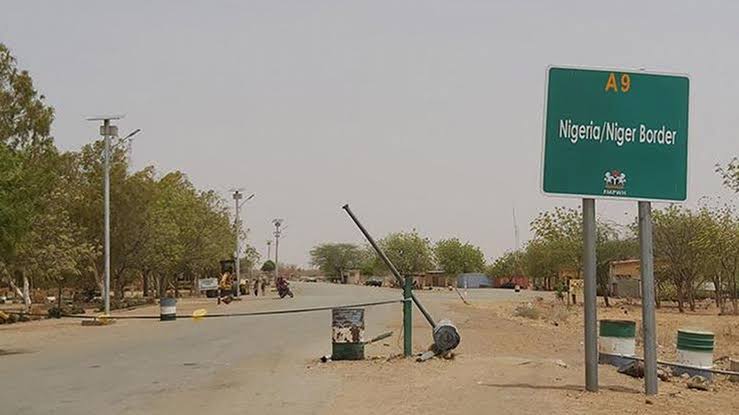
According to a 2026 report presented at a National Boundary Commission workshop in Abuja, Nigeria has more than 1,400 unauthorised border crossing routes—far exceeding the number of approved entry points. While these routes have long facilitated informal trade and the movement of border communities, security officials say they are increasingly being exploited for arms trafficking, irregular migration and organised crime.
Speaking at the workshop, Rear Admiral S.S. Lassa (Rtd) warned that neglected border communities and weak enforcement have created opportunities for serious crimes, including terrorism and human trafficking.
Across Nigeria, insecurity has evolved into a complex, multi-layered crisis. From the Boko Haram insurgency in the North-East to banditry in the North-West, as well as escalating violence in the North-Central and parts of southern Nigeria, analysts say domestic security challenges are increasingly intersecting with transnational criminal networks.
A Backdoor for Insecurity
Available research suggests porous borders continue to play an important role in sustaining insecurity. A 2025 study published by the International Journal of Social, Management and Peace Conflict Research (IJSMPCR) linked weak border controls to the rise in banditry and kidnapping, arguing that they enable armed groups to move more freely and strengthen their operations.
Developments in 2026 appear to reinforce those concerns.
Security agencies have announced a series of arrests involving foreign nationals allegedly linked to criminal activities. In Kwara State, two Togolese nationals were arrested over an alleged kidnap and extortion plot. In Lagos, operatives uncovered a suspected illegal entry network in Epe, leading to the arrest of dozens of foreign nationals from across West and Central Africa. In a related operation, the Nigerian Army arrested 24 undocumented foreign nationals within the same axis.
At the federal level, concerns over cross-border criminality have also been acknowledged. The Special Adviser to President Bola Tinubu on Media and Public Communications, Daniel Bwala, said Nigerian troops had arrested foreign nationals allegedly linked to insecurity in different parts of the country, although he said their identities were withheld because of diplomatic sensitivities.
Kidnapping has also evolved into a major source of funding for criminal groups operating across multiple regions.
Available data indicates that at least 529 people abducted in major incidents between February and July 2026 remain in captivity. The victims include schoolchildren, worshippers, farmers, commuters and security personnel, many of whom have spent months in kidnappers’ camps.
Although security agencies reported rescuing 1,764 abducted persons between January and June 2026, fresh kidnappings continue to outpace rescue efforts, underscoring the persistence of the crisis.
The scale of violence has remained alarming. Civil society organisations estimate that more than 7,000 Nigerians may currently be held in captivity across multiple states, while Amnesty International reported more than 1,100 abductions across northern Nigeria during the first four months of 2026 alone.
Taken together, these figures illustrate the magnitude of Nigeria’s security crisis. Security officials and analysts argue that porous borders and increasingly sophisticated transnational criminal networks have become important factors sustaining the violence.
Foreign Involvement and a Regional Security Crisis
Nigeria’s security challenges are closely linked to instability across the wider Sahel, particularly in poorly governed border regions that enable the movement of fighters, weapons and illicit goods.
The Chief of Defence Staff, General Christopher Musa, has repeatedly argued that securing Nigeria’s borders is a matter of national security, suggesting that fencing sections of the country’s borders could help reduce infiltration by armed groups.
Conflict monitoring organisations, including the Center for Preventive Action, have documented sustained violence across the Lake Chad Basin and wider Sahel, where armed groups continue to exploit weak governance and porous borders.
The insecurity has also fuelled a deepening humanitarian crisis. Nigeria recorded more than 3.4 million internally displaced persons between late 2025 and early 2026, including approximately 2.2 million in the North-East and more than 1.1 million across the North-West and North-Central regions.
The growing reach of armed groups has increasingly affected members of the security forces. The killing of Major General Rabe Abubakar (Rtd) and the abduction of three soldiers travelling from Zaria to Zamfara illustrate the expanding operational reach and confidence of criminal groups.
Regional integration has introduced additional complexities. While the ECOWAS Protocol on Free Movement was designed to promote economic integration and mobility across West Africa, security experts say weak enforcement has created vulnerabilities that can be exploited by criminal networks, highlighting the challenge of balancing regional mobility with national security.
Beyond the Border: Confronting a Deeper Security Challenge
Although awareness of border insecurity has grown, structural weaknesses, limited resources and poor coordination among security agencies continue to undermine effective border management.
The federal government has begun introducing technological measures aimed at improving border security. Minister of Interior Dr Olubunmi Tunji-Ojo recently announced the deployment of an artificial intelligence-driven system capable of tracking travellers entering Nigeria and accessing historical travel and visa compliance records.
At the National Boundary Commission workshop in June 2026, experts also proposed transitioning to a Smart Border Management System incorporating surveillance technology, improved intelligence sharing and greater coordination among security agencies.
However, analysts caution that technology alone cannot resolve the crisis.
Persistent kidnapping networks, the continued flow of illicit arms and the prolonged captivity of victims point to deeper governance challenges. Weak intelligence coordination, inadequate institutional capacity and the absence of a comprehensive national database of kidnap victims continue to hamper effective responses. In many cases, victims disappear from official records, leaving families with little institutional support.
The human cost remains severe. Across communities in Kwara, Kaduna, Borno and Zamfara states, residents have abandoned farms, markets and other economic activities because of persistent attacks and the fear of further violence. Families of abducted victims often sell assets, incur significant debts or endure prolonged uncertainty while awaiting information about their loved ones.
For many analysts, Nigeria’s insecurity reflects the convergence of porous borders, weak institutions and increasingly sophisticated criminal networks. Securing the country’s borders, they argue, is therefore not simply a geographical challenge but one that requires stronger governance, institutional reform, regional cooperation and sustained political commitment.
Expert: Porous Borders Pose Multi-Dimensional Security Threat
Security and intelligence analyst Dr Yahuza Getso Ahmad described Nigeria’s porous borders as a significant driver of insecurity, saying they have become corridors for weapons trafficking, illicit financial flows and organised criminal activity.
According to him, the ease of cross-border movement has enabled a steady influx of arms that continues to fuel banditry, kidnapping and insurgency.
“What we are witnessing is the regionalisation of crime. These groups collaborate, exchange resources and move across borders with relative ease.”
Dr Ahmad also identified corruption and weak institutional coordination as major obstacles to effective border management, warning that compromised enforcement systems make sustained border security difficult.
While acknowledging the benefits of surveillance technology, he cautioned against relying on technological solutions alone.
“Technology can support security efforts, but it cannot substitute for institutional strength.”
He argued that sustainable progress will require governance reforms, accountability and stronger collaboration among security agencies.
“Until the underlying issues of leadership, accountability and institutional weakness are addressed, efforts to curb cross-border crime will remain constrained.”
