


Unsafe on the shelves: How fake and adulterated food is putting Nigerians at risk
The discovery of an alleged illegal juice factory in Badagry and a fresh warning over adulterated palm oil have renewed concerns about what Nigerians are consuming — and whether the country’s food-safety system is doing enough to keep dangerous products off the shelves.
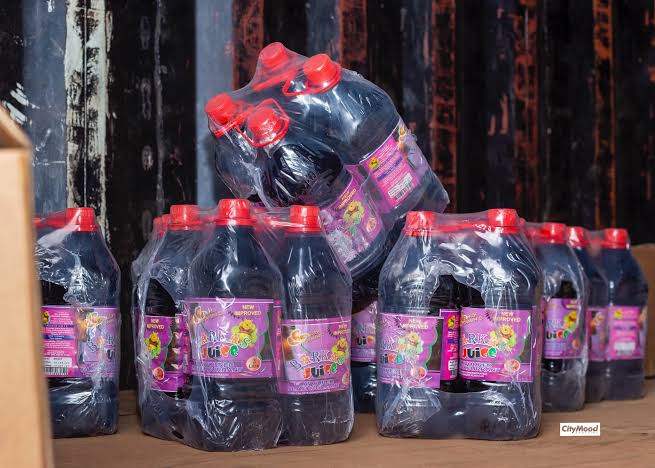
In Badagry, Lagos, operatives of the Nigeria Security and Civil Defence Corps arrested two women following the discovery of an alleged illegal juice-production facility. Authorities said the operation uncovered equipment and materials allegedly being used to produce a fruit drink without genuine fruit content, while the product reportedly carried a falsified registration number.
Around the same time, the Lagos State Government warned consumers about the alleged adulteration of palm oil with artificial colouring agents, including azo dyes. Authorities also raised concerns about the mixing of palm oil with recovered or recycled cooking oils.
The discovery of an alleged illegal juice factory in Badagry and a fresh warning over adulterated palm oil have renewed concerns about what Nigerians are consuming — and whether the country’s food-safety system is doing enough to keep dangerous products off the shelves.
Food adulteration in Nigeria is not limited to one product or one city.
Regulatory authorities have repeatedly uncovered counterfeit beverages, adulterated food, unregistered products, illegal production facilities and other non-compliant goods.
NAFDAC says that between May and July 2026 alone, it inspected 6,233 facilities nationwide and removed 7,210 non-compliant products from circulation. Of those products, 3,633 were food and water products, the largest category recorded during the period.
The scale of these seizures raises a difficult issue: if thousands of non-compliant products can be identified during only a three-month period, how many others are reaching consumers without being detected?
There is no reliable national figure that can answer that question, partly because food-safety surveillance remains fragmented and many food businesses operate in Nigeria’s large informal economy.
A 2026 peer-reviewed review of Nigeria’s food-safety system identified weak regulatory enforcement, inadequate funding, insufficient personnel, limited laboratory infrastructure and fragmented institutional responsibilities as major challenges. It also found that regulatory action is often reactive, with agencies responding to problems after they emerge rather than consistently preventing them through systematic surveillance.
Nigeria has several institutions with responsibilities connected to food safety, including NAFDAC, the Standards Organisation of Nigeria, the Federal Ministry of Health, agricultural authorities and state and local governments.
NAFDAC itself has recently explained that some unbranded and unpackaged products sold in open markets — including certain palm-oil products — fall outside its direct regulatory oversight, placing significant responsibility on sub-national authorities.
This creates a potential gap between what is legally regulated at the federal level and what consumers encounter daily in informal markets.
The 2026 review similarly identified fragmented mandates and weak coordination between agencies as factors that can produce duplication in some areas while leaving gaps in others.
An investigation published by BusinessDay in September 2026 reported that NAFDAC conducted 5,210 investigations and 45,657 surveillance operations between 2023 and 2025, but only 40 cases were pursued for prosecution during that three-year period.
That disparity is important because seizure and destruction remove individual batches from circulation, but consistent prosecution and deterrent penalties are what can make illegal production economically unattractive.
A 2025 policy paper from Nigeria’s National Institute for Legislative and Democratic Studies argued that some penalties contained in the country’s food and drug regulatory laws are too low relative to the financial value of the businesses involved.
The paper said weak penalties may reduce their deterrent effect and recommended legislative changes to strengthen sanctions.
At the same time, NAFDAC’s newer Food Hygiene Regulations 2025 provide for penalties including imprisonment and fines for violations, demonstrating that the regulatory framework is evolving.
The challenge, therefore, is not simply whether Nigeria has food-safety laws.
It is whether those laws are consistently enforced across factories, warehouses, markets, distributors and informal businesses.
Unsafe food can expose consumers to biological, chemical and physical hazards.
The consequences range from acute food poisoning and gastrointestinal illness to longer-term health risks depending on the contaminant and level of exposure.
The World Health Organization estimates that foodborne diseases remain a major global public-health problem, particularly in low- and middle-income countries.
For Nigeria, the danger is amplified by the size of the informal food sector, limited cold-chain infrastructure, poor storage conditions, inadequate sanitation and difficulties monitoring thousands of small-scale producers and traders.
The Badagry juice factory and the palm-oil warning should therefore not be viewed simply as two isolated enforcement stories.
They expose weaknesses at different points of the food chain — production, registration, surveillance, distribution and market monitoring.
Regulatory agencies are carrying out raids, seizures, laboratory tests and prosecutions. But the continuing discovery of illegal factories and non-compliant products suggests that enforcement is struggling to match the scale and complexity of the market.
NAFDAC’s own 2024–2027 strategic plan recognises the need for hundreds of surveillance operations annually, follow-up inspections and stronger enforcement against unwholesome and substandard products.
The question now is whether Nigeria can move from periodic crackdowns to sustained prevention.
