


Dr Gladys West, mathematician whose work helped make GPS possible, dies at 95
Dr Gladys Mae West, the American mathematician whose work on modelling the Earth helped lay the mathematical foundation for modern Global Positioning System (GPS) technology, has died at the age of 95.
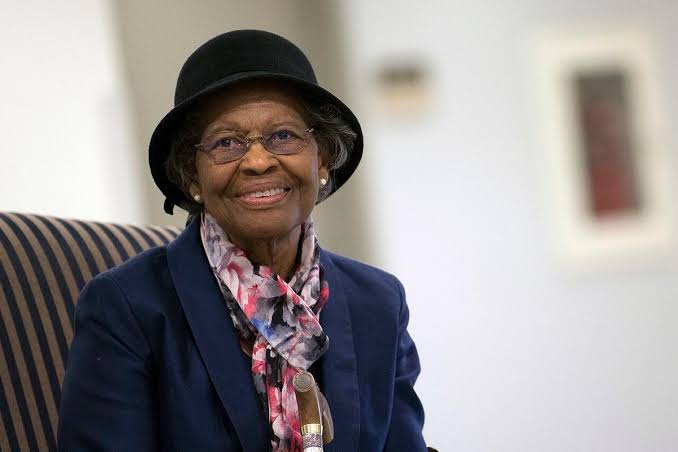
West died on January 17, 2026, after a career spanning more than four decades at the US Naval Proving Ground in Dahlgren, Virginia. Her death was confirmed by officials and reported by multiple sources.
Born in 1930 in Dinwiddie County, Virginia, West grew up on a farm during the era of racial segregation in the United States. She earned degrees in mathematics from Virginia State College, now Virginia State University, before joining the Naval Proving Ground in 1956.
At the facility, she became one of the few Black employees and worked extensively with computers and satellite data. Her most significant contribution came through her work developing increasingly precise mathematical models of the Earth’s shape and gravitational variations.
Those calculations helped scientists determine satellite positions and movements with the accuracy required for satellite-based navigation. Her work therefore became an important part of the technological foundation on which GPS was later developed.
Despite the importance of her work, West remained largely unknown to the public for much of her career. She gained wider recognition decades later, particularly after the US Air Force inducted her into its Space and Missile Pioneers Hall of Fame in 2018.
Her story has since been described as that of a “hidden figure” in the development of modern navigation technology.
West retired from the Navy after 42 years of service but continued her education, eventually earning a doctorate from Virginia Tech.
Today, GPS is used worldwide for navigation, aviation, shipping, telecommunications, emergency services, mapping and everyday smartphone location services.
West’s legacy is therefore not simply the creation of a technology, but the mathematical groundwork that helped make highly accurate satellite positioning possible.
