


Ex-Vice President Atiku Sues Tinubu Over Alleged NYSC Certificate Forgery, Seeks 2027 Disqualification
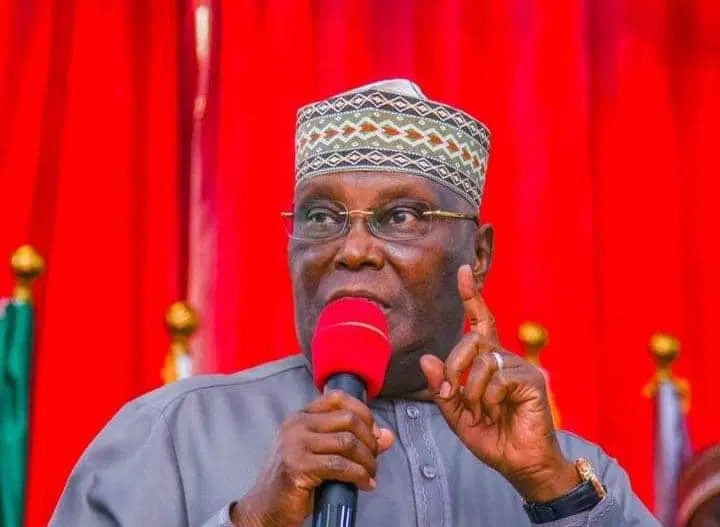
Former Vice President and African Democratic Congress presidential candidate Atiku Abubakar has taken President Bola Tinubu to court over an alleged forged National Youth Service Corps certificate, asking the Federal High Court in Abuja to disqualify the president from contesting the 2027 presidential election.
The suit, filed on Friday, August 14, is the latest chapter in the long-running dispute over Tinubu’s academic and NYSC records, which has followed the president since the 2023 presidential election.
Atiku is asking the court to determine whether Tinubu is constitutionally qualified to seek another term after allegedly submitting a false NYSC discharge certificate to the Independent National Electoral Commission (INEC).
The case also reportedly names INEC as a defendant and seeks orders preventing the electoral commission from accepting Tinubu’s nomination for the 2027 presidential election.
During the 2023 election litigation, Atiku’s legal team obtained records from Chicago State University and presented several documents before the Presidential Election Petition Court, including an NYSC discharge certificate and academic records bearing variations of Tinubu’s name. The documents were admitted as evidence.
Atiku subsequently attempted to introduce evidence obtained from the United States into his appeal before Nigeria’s Supreme Court. The Supreme Court, however, said allegations of certificate forgery would have to be established to the required legal standard.
The presidential election petitions challenging Tinubu’s 2023 victory were ultimately unsuccessful.
The new case is therefore not simply a continuation of the 2023 election petition. It represents a fresh attempt to challenge Tinubu’s eligibility ahead of the 2027 election.
Another certificate controversy already before the courts
The latest suit comes amid a broader debate in Nigeria over the authenticity of credentials submitted by public officials.
In June, another organisation, the Centre for Reforms and Public Advocacy, filed a separate Federal High Court case seeking Tinubu’s disqualification from the 2027 election over alleged discrepancies involving his academic and NYSC certificates. That case also names INEC and Chicago State University among the defendants.
The organisation’s allegations remain allegations and have not been established as fact by a court.
The issue of forged credentials has also recently attracted national attention following the case involving former Minister of Science, Innovation and Technology Uche Nnaji, who resigned from office after allegations that his university and NYSC certificates were not genuine. Nnaji has denied wrongdoing and subsequently entered settlement discussions with the University of Nigeria, Nsukka, over the dispute.
The lawsuit comes at a particularly important stage of Nigeria’s political calendar, with the 2027 general elections approaching and Atiku already emerging as the ADC’s presidential candidate.
If the Federal High Court ultimately finds that Tinubu submitted forged documents to INEC and that this amounts to a constitutional disqualification, the consequences could be politically significant.
However, the filing of the lawsuit does not mean Tinubu has been found guilty of forgery or has been disqualified. Atiku’s allegations must still be established through the judicial process, and Tinubu and the other defendants will have the opportunity to respond.
The case could also revive the intense political and legal battles that followed the 2023 election, when Atiku and Labour Party candidate Peter Obi separately challenged Tinubu’s victory.
With the 2027 contest already taking shape, the new litigation is likely to add another major legal dimension to an increasingly competitive presidential race.
