


Government Condemns U.S. Pentagon Move Targeting Major Tech Firms
China has expressed strong dissatisfaction with a recent move by the United States Department of Defense to place several leading Chinese technology firms on a list it says is linked to the Chinese military, marking a fresh escalation in tensions between the two global powers.
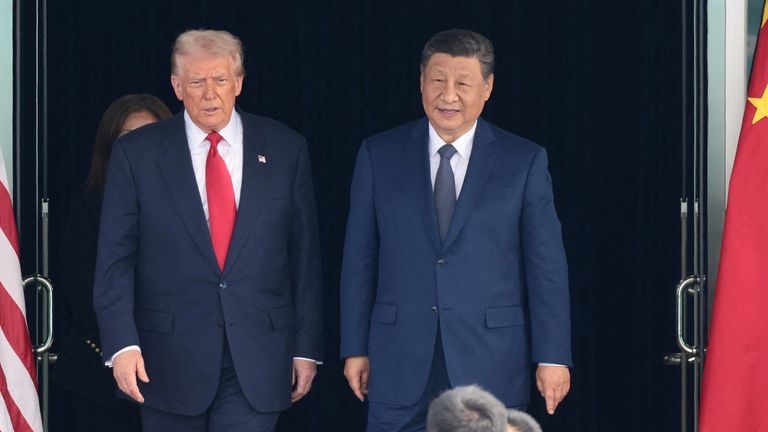
In a statement, China’s Ministry of Commerce criticized the decision, arguing that it unfairly targets Chinese companies and undermines normal trade and business cooperation. Officials in Beijing described the move as a politicization of economic and technological issues.
The Pentagon’s designation is part of a broader U.S. strategy aimed at restricting the influence of companies it believes have ties to China’s military establishment. Firms affected by such listings often face increased scrutiny, potential sanctions, and limitations in accessing U.S. markets and investment.
Chinese authorities, however, maintain that the companies involved operate independently and in compliance with international laws. They have called on Washington to reverse what they describe as unjustified suppression of Chinese enterprises.
The development adds to an ongoing pattern of friction between the United States and China, particularly in the technology sector, where competition over semiconductors, artificial intelligence, and telecommunications infrastructure has intensified in recent years.
Analysts warn that continued escalation could disrupt global supply chains and deepen the divide between Western and Chinese technology ecosystems, with implications for emerging markets that rely on both.
For African countries, including Nigeria, the standoff raises concerns about access to affordable technology and infrastructure partnerships, as many rely on Chinese firms for telecommunications expansion and digital development projects.
The dispute underscores how strategic competition between major powers is increasingly shaping the global technology landscape, with ripple effects far beyond Washington and Beijing.
