


Government to Deploy Journalists With Military Units to Improve Security Reporting
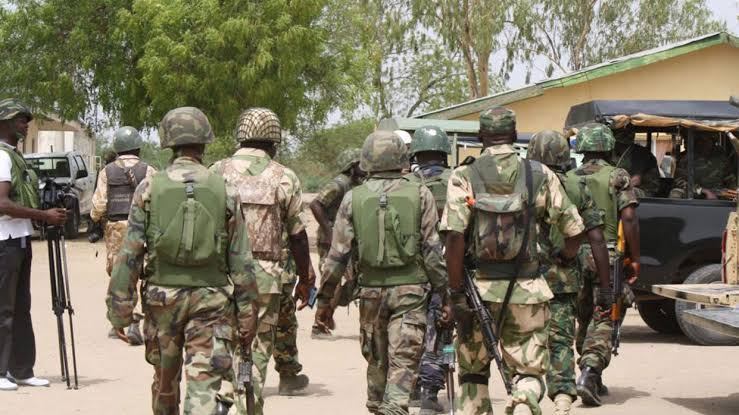
The Federal Government has announced plans to integrate journalists into selected military operations as part of efforts to improve transparency in security reporting and strengthen public understanding of counterinsurgency and internal security activities.
The Minister of Defence, General Christopher Gwabin Musa (rtd.), disclosed the initiative during the National Security Summit organised by the Nigeria Union of Journalists in partnership with the Department of State Services in Abuja. He was represented at the event by Rear Admiral Olusanya Bankole (rtd.), his Special Adviser.
According to the ministry, the policy is aimed at deepening cooperation between the media and security agencies while enhancing public trust in military operations. It also seeks to provide journalists with direct exposure to operational environments in order to improve the accuracy and depth of security-related reportage.
The summit, themed “Media and Security Agencies as Partners in Nation Building,” brought together security officials, policymakers, media executives, academics, and civil society actors to examine strategies for addressing Nigeria’s evolving security challenges.
General Musa noted that modern security threats now extend beyond traditional combat zones to include information and communication spaces. He stressed that the effectiveness of security operations should be assessed not only by battlefield outcomes but also by the level of public confidence in security institutions.
He further warned against the release of sensitive operational details, explaining that premature disclosure of such information could endanger personnel and compromise ongoing missions.
The Defence Minister stated that the planned embedding arrangement would allow journalists to observe selected operations at close range, thereby improving understanding of military activities and strengthening public communication.
The Minister of Information and National Orientation, Mohammed Idris, also speaking at the summit, highlighted the growing complexity of global security threats, including terrorism, cybercrime, and disinformation. He called for stronger collaboration between the media and security institutions based on trust, professionalism, and mutual respect.
Idris noted that the federal government, under President Bola Ahmed Tinubu, has prioritised security through investments in intelligence gathering, military equipment, surveillance systems, and community-based security strategies.
The National Security Adviser, Nuhu Ribadu, represented by Chido Onumah, emphasised the need for improved coordination between journalists and security agencies to balance public information needs with national security considerations. He disclosed that a national communication framework is being developed to enhance structured information sharing and reduce misinformation risks.
Academic contributions at the summit also underscored the importance of media visibility in shaping public perception of security operations. Scholars called for stronger civic education and institutional reforms to improve national governance and security outcomes.
The summit concluded with a consensus on the need for sustained collaboration between the media and security agencies as a key strategy for strengthening national stability and democratic accountability.
