


Guinea-Bissau Votes on Constitution to Expand Presidential Powers
Voters in military-ruled Guinea-Bissau went to the polls on Sunday, August 30, in a constitutional referendum that could significantly increase the powers of the presidency ahead of elections planned for December.
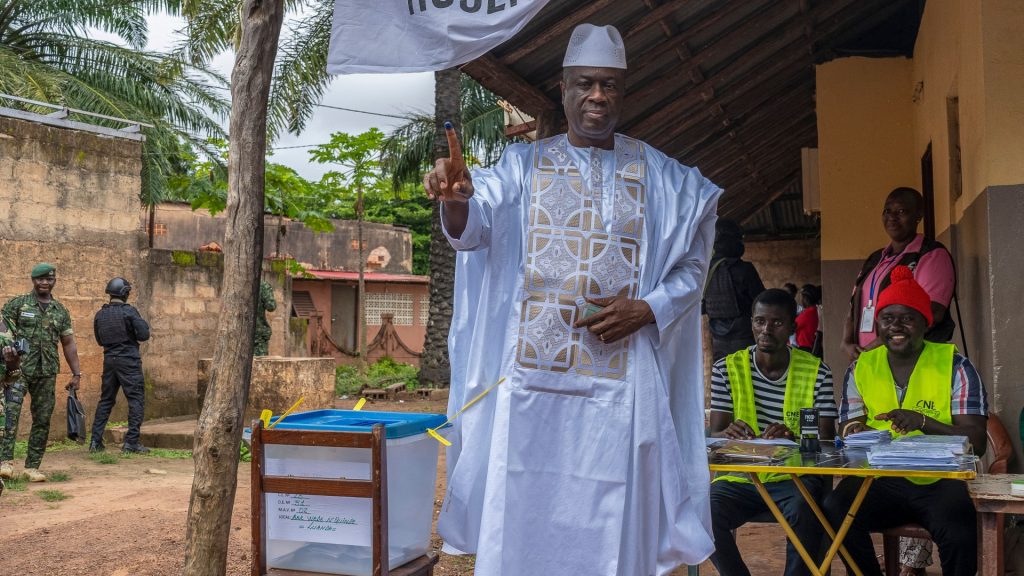
The referendum comes less than a year after the military seized power following a disputed presidential election. The junta says the proposed constitutional changes are intended to address the country’s long-running political instability and create a stronger executive ahead of the return to civilian rule.
More than 900,000 people are eligible to vote in the referendum in the country of about 2.2 million people. Voting was reported to be slow in some areas, with the opposition calling for a boycott of the exercise.
The proposed constitution would transform Guinea-Bissau’s existing semi-presidential system by giving the president substantially greater control over the government.
Under the current system, parliament’s majority determines the prime minister, who then appoints the cabinet. Under the proposed constitution, the president would appoint and dismiss the prime minister and other government members, chair the Council of Ministers and have authority to create or abolish ministries.
The president could also dissolve parliament during a grave political crisis and dismiss the government under certain circumstances.
The changes would also reduce the country’s parliament from 102 seats to 65 and cut the number of electoral constituencies from 29 to 12.
The proposed rules would further require presidential candidates to have lived permanently in Guinea-Bissau for the five years preceding an election, while presidential hopefuls would have to pay a 50 million CFA franc deposit, roughly $90,000.
The referendum has become controversial because the constitutional proposal was prepared under the military-led transitional government, rather than by an elected parliament.
Opposition parties have urged citizens to boycott the vote, arguing that the process could legitimise a concentration of power in the presidency and undermine parliament.
Human-rights groups and political critics have similarly questioned the legitimacy of allowing an unelected transitional authority to rewrite the country’s political system before elected institutions return.
The Guinean League for Human Rights has described the proposed changes as an excessive concentration of power in the presidency and criticised what it says was a lack of consultation with political parties and civil society.
The Africa Center for Strategic Studies has also warned that the proposed constitution could weaken existing power-sharing arrangements and increase executive dominance in a country with a long history of political instability.
Guinea-Bissau has been under military rule since November 2025, when the armed forces seized power following a disputed presidential election.
The coup occurred just one day before electoral authorities were expected to announce the results of the presidential election, in which then-President Umaro Sissoco Embaló and opposition candidate Fernando Dias had both claimed victory.
The African Union subsequently suspended Guinea-Bissau from its activities following the unconstitutional change of government.
The junta says the referendum is part of the process of preparing the country for a return to elected government.
