


Health Officials Turn to Mobile-Phone Data to Track Ebola Spread in Congo
Health authorities in the Democratic Republic of Congo are turning to anonymised mobile-phone data to track population movements and predict where the country’s rapidly spreading Ebola outbreak could go next.
The approach, being used with the World Health Organization and Swedish non-profit Flowminder, analyses data generated when mobile phones connect to telecommunications antennas. It allows researchers to identify patterns of movement between communities without tracking individual users.
Flowminder initially analysed data from Vodacom, one of Congo’s largest mobile operators, focusing on areas including Bunia, Mongbwalu and Rwampara in Ituri province. The analysis revealed travel links between affected communities and other locations, helping officials identify areas that could face an increased risk of infection.
The model also highlighted Kisangani, an important transport hub, as a potential priority for preventive action because of the volume of people travelling there. Health authorities are also using the data to assess possible routes through which the virus could reach Kinshasa and neighbouring countries.
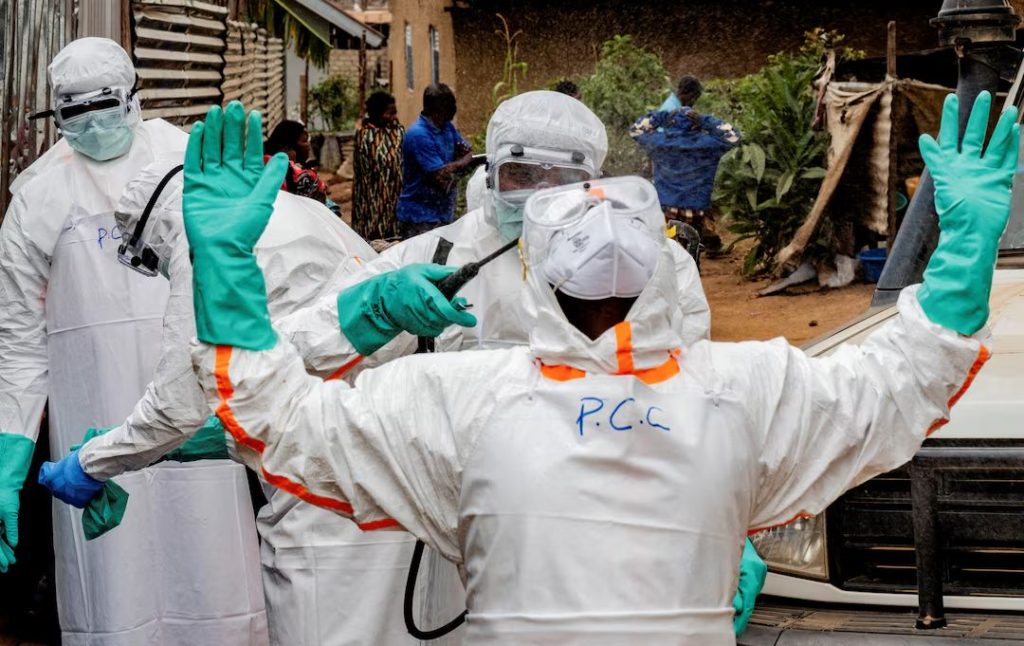
The technology is being deployed as Congo battles its worst Ebola outbreak on record. Government figures show that more than 6,250 infections and 3,000 deaths have been recorded across six provinces. The outbreak is caused by the Bundibugyo strain, for which there is currently no approved vaccine or specific treatment.
Population movement has become a major challenge for health workers. The outbreak is occurring in areas affected by insecurity, displacement and significant trade and travel, making traditional contact tracing increasingly difficult. WHO has warned that many infections are not linked to previously known cases, complicating efforts to break transmission chains.
But the technology has limitations. The current analysis relies on data from only one telecommunications operator and may therefore not capture all population movements, particularly cross-border travel. Efforts are underway to incorporate information from additional operators to provide a more complete picture.
The use of mobile-phone data represents a new tool in Congo’s Ebola response, allowing health officials to anticipate population movements rather than simply react after infections are detected. As the epidemic continues to spread, authorities hope the technology can help them identify emerging hotspots early enough to deploy surveillance, testing and other interventions.
