


Landfill Landslide Kills 30 in Guinea’s Capital After Heavy Rain
At least 30 people have been killed and 22 others injured after a massive mound of waste collapsed at a landfill in Guinea’s capital, Conakry, following heavy overnight rainfall.
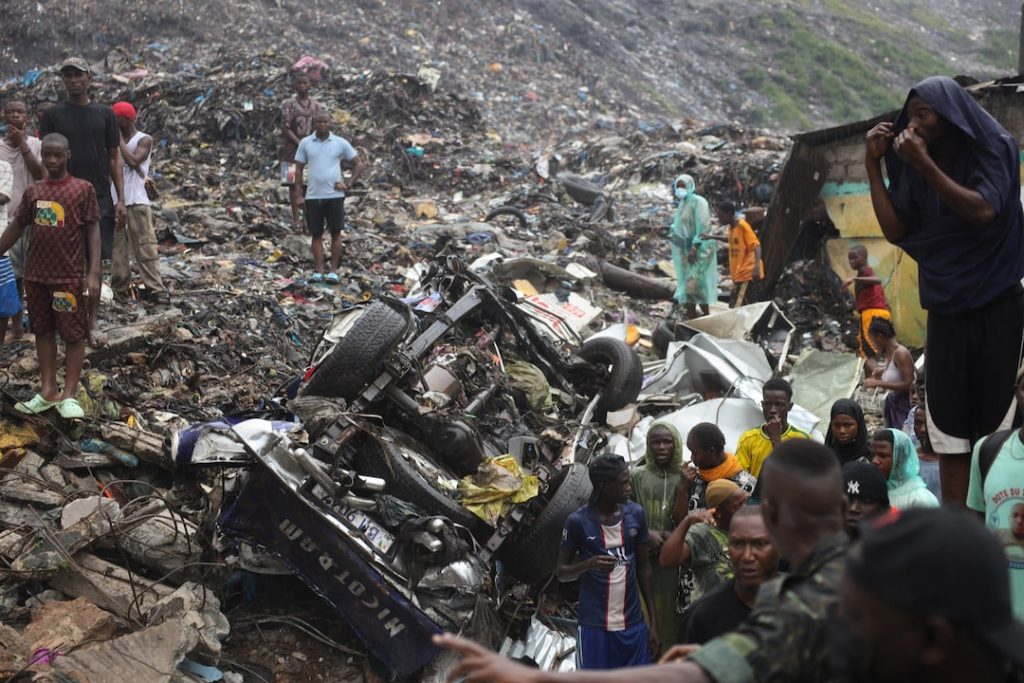
The landslide occurred at about 2 a.m. on Sunday in the Gbessia commune, when heavy rain caused a large section of the Dar Es Salam landfill, the city’s largest open-air waste dump, to collapse onto nearby tents, shacks and homes. Guinea’s government confirmed the death toll.
Of those injured, six were seriously hurt while 16 sustained minor injuries, according to the government. Rescue teams using excavators and other equipment were continuing to search through the debris for possible survivors and recover bodies.
The scale of the collapse was significant, with witnesses saying the waste mound was large enough to bury an apartment building as well as several makeshift structures.
The tragedy occurred just days after Guinean authorities announced plans to close the landfill and relocate the waste outside Conakry, citing safety concerns, particularly during the rainy season.
Authorities had also issued eviction notices to people living around the landfill, but many residents remained in the area when the collapse occurred. The government has now pledged to relocate families still living near the site to safer locations.
Prime Minister Amadou Oury Bah visited the disaster site to oversee the response and called on residents to remain calm and follow instructions from rescue and emergency services.
The disaster has renewed questions about waste management and the government’s handling of the landfill.
Residents had reportedly raised concerns about the safety of the site and its proximity to homes. One local activist, Abou Hamza, told AFP that residents had organised protests and called on authorities to address the danger before the collapse.
The latest disaster also recalls an earlier deadly incident at the same landfill. Nine people were killed in a similar accident there in 2017, according to reports.
The tragedy highlights the wider challenges facing Conakry, where rapid population growth, inadequate infrastructure and poverty have increased the number of people living in vulnerable areas.
Despite Guinea’s enormous mineral wealth — including the world’s largest known bauxite reserves — the World Bank estimates that 43.7% of the country’s population lives below the national poverty line. About 3.7 million of Guinea’s 15.1 million people were living on less than $4.20 a day, according to a World Bank report cited by Reuters.
The government has deployed emergency and rescue resources to the site, while authorities continue assessing the damage and searching for anyone who may remain trapped beneath the waste.
With the death toll already at 30, officials have not ruled out the possibility that the number could rise as rescue operations continue.
