


Nearly 1.9 Million Somali Children Face Malnutrition as Aid Cuts Close Health Facilities
Nearly 1.9 million children in Somalia are expected to suffer from acute malnutrition in 2026, as drought, conflict, displacement and severe cuts to humanitarian assistance deepen one of the country’s worst child nutrition crises in years.
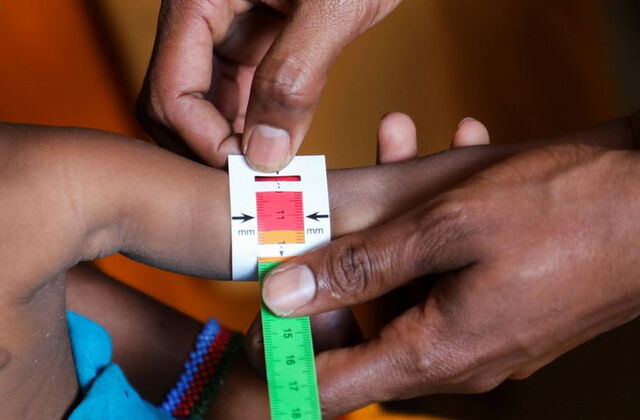
UNICEF said on Friday that the number of children being admitted to health facilities with severe acute malnutrition and medical complications has risen by 32 per cent, placing additional pressure on an already overstretched health system.
The agency warned that the crisis is being compounded by the closure of hundreds of health and nutrition facilities following major reductions in humanitarian funding.
According to UNICEF, 205 health and nutrition facilities have already closed, while as many as 618 more could shut down if additional funding is not secured. The closures are forcing families in some of Somalia’s poorest and most drought-affected communities to travel considerably farther to access treatment.
The projected 1.9 million children facing acute malnutrition include nearly 500,000 expected to suffer severe acute malnutrition (SAM), the most dangerous form of wasting.
Children with severe wasting are particularly vulnerable to infections and death. UNICEF and other UN agencies estimate that severely malnourished children face a dramatically higher risk of dying from common childhood illnesses than well-nourished children.
The scale of the emergency has already been reflected in Somalia’s food-security figures.
The UN estimated in May that 6 million people — about 31 per cent of Somalia’s population — were experiencing crisis-level food insecurity or worse between April and June. Nearly 1.9 million people were projected to face Emergency-level food insecurity, or IPC Phase 4.
Somalia’s worsening nutrition crisis is being driven by several overlapping shocks.
Years of conflict have disrupted livelihoods and displaced millions of people, while recurring droughts have depleted water sources, damaged crops and weakened livestock herds. High food and fuel prices are also reducing families’ ability to afford nutritious food.
UNICEF has warned that the country’s humanitarian situation is being further aggravated by shrinking international assistance, leaving many vulnerable families without the support they previously depended on.
The agency estimates that about 4.8 million people, including 3 million children, will require humanitarian assistance in Somalia during 2026.
The reduction in funding is affecting more than nutrition programmes.
UNICEF said the closure of health facilities is also disrupting access to essential healthcare, clean water, sanitation and child-protection services. Reduced coverage is particularly dangerous for malnourished children, whose weakened immune systems make them more susceptible to diseases.
Somalia has already recorded worrying increases in some infectious diseases. UNICEF reported that measles cases doubled during January–March 2026 compared with the same period in 2025, with malnourished children among those most vulnerable to severe illness.
The situation also threatens to reverse some of the gains made through nutrition programmes. In 2025, UNICEF and its partners treated more than 440,000 children aged six to 59 months for severe acute malnutrition, with a reported cure rate of 97.6 per cent.
