


Nigeria Pushes for African Influence in UN Security Decisions
Nigeria has renewed its campaign for a stronger African role in the United Nations Security Council, arguing that the continent should have greater influence over international decisions on conflicts and peacekeeping operations that frequently affect its countries.
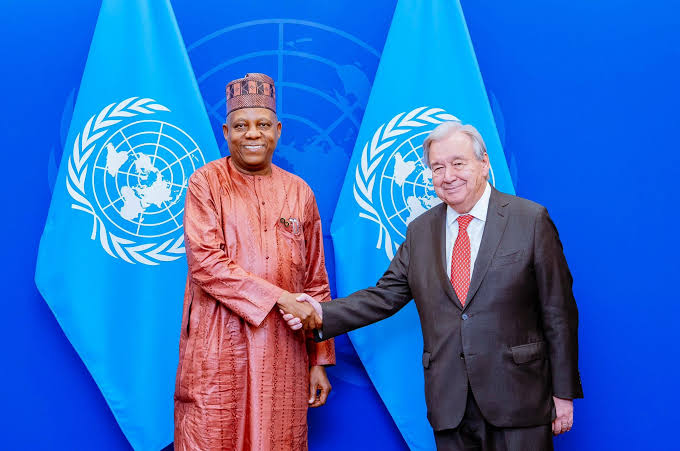
Vice President Kashim Shettima made the case during a meeting with UN Deputy Secretary-General Amina Mohammed on the sidelines of the 81st General Assembly in New York. He maintained that Africa’s absence from the council’s permanent membership was increasingly difficult to justify given the continent’s contribution to international peace and security.
The Security Council currently has five permanent members and 10 elected members. No African country holds a permanent seat, although African states regularly serve as elected members. Nigeria has consistently backed the African Union position calling for at least two permanent seats and five non-permanent seats for the continent. The African position also calls for veto powers for new permanent members if the veto is retained under any future reform.
The demand comes as negotiations on Security Council reform continue at the United Nations. Recent discussions have recorded broad support for improving Africa’s representation, although member states remain divided over the number and type of additional seats and the future of the veto.
Nigeria has also linked the reform debate to wider concerns over the credibility of the international system, particularly its response to armed conflicts, displacement and humanitarian crises. UN Secretary-General António Guterres has similarly called for permanent African representation, saying the current arrangement does not reflect the realities of 2026.
For Nigeria, the issue is therefore not only about securing seats at the United Nations. It is also about ensuring that African countries have a stronger role in shaping decisions on security matters that affect the continent, rather than largely responding to decisions made without permanent African representation.
