


Nigeria, US Framework Targets Local Processing of $700bn Mineral Wealth
Nigeria and the United States have agreed on a framework to expand investment in Nigeria’s mining sector, with greater local processing and development of mineral value chains placed at the centre of the partnership.
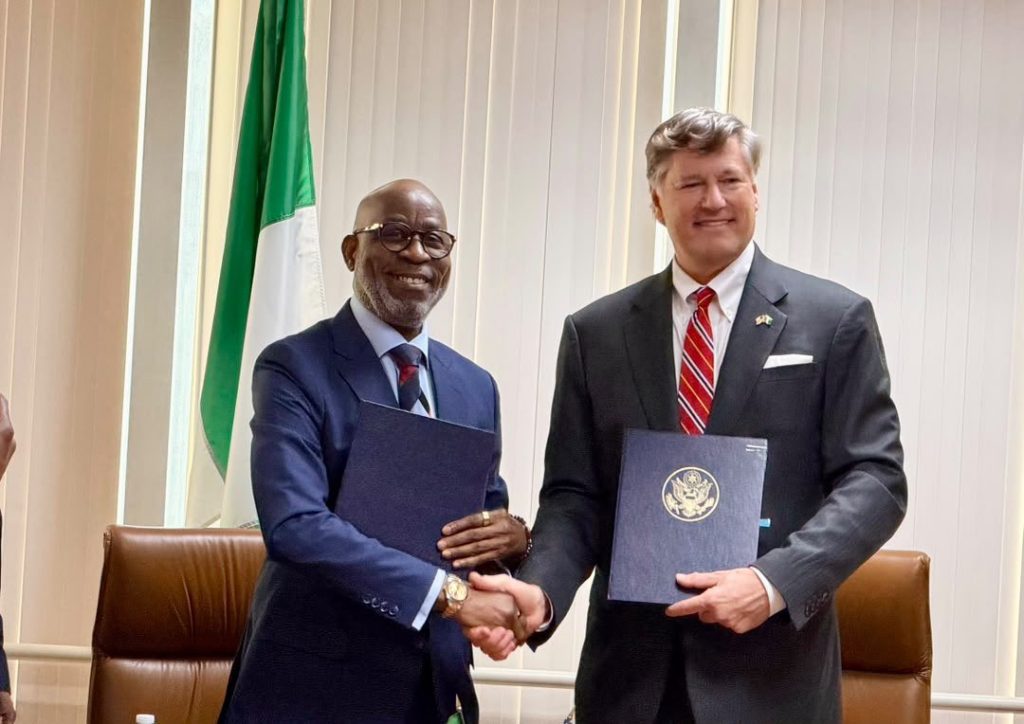
The agreement, signed by Nigeria’s Minister of Solid Minerals Development, Dele Alake, and US Deputy Secretary of State Christopher Landau in New York, is expected to facilitate investment and business partnerships across exploration, mineral development, processing, infrastructure and technical capacity.
Rather than focusing only on extracting and exporting minerals, the framework is designed to encourage more activities to take place within Nigeria. This could include processing minerals locally, developing supporting infrastructure and building technical skills needed to create businesses around the country’s estimated $700 billion mineral resource base.
The move comes as Nigeria seeks to reduce its dependence on oil and expand non-oil sources of economic growth. Greater domestic processing could allow Nigerian companies to participate in more stages of the mineral supply chain, potentially creating opportunities for employment, industrial development and technology transfer.
For the United States, the partnership also provides an avenue to deepen access to critical minerals at a time when countries are seeking more secure and diversified supply chains. The framework is expected to provide a basis for commercial partnerships between businesses in both countries rather than relying solely on government-to-government cooperation.
The agreement, however, will need to move from policy commitments to actual projects before its economic impact can be measured. Nigeria plans to identify viable mining projects, attract investment and develop commercial partnerships as implementation progresses.
The success of the partnership could ultimately depend on whether it delivers more than increased mineral extraction. For Nigeria, the larger test will be whether its mineral wealth can support local industries, skilled jobs and processing capacity instead of leaving the country primarily as a supplier of raw materials.
