


Press Freedom Calls Grow Louder as Media Stakeholders Meet In Abuja
By Habibat Muhammed Sani
Stakeholders in the media, civil society, and public sector have called for enhanced protection of journalists and renewed commitment to press freedom at the 2026 World Press Freedom Day commemoration held on May 7 at the Abuja Continental Hotel.
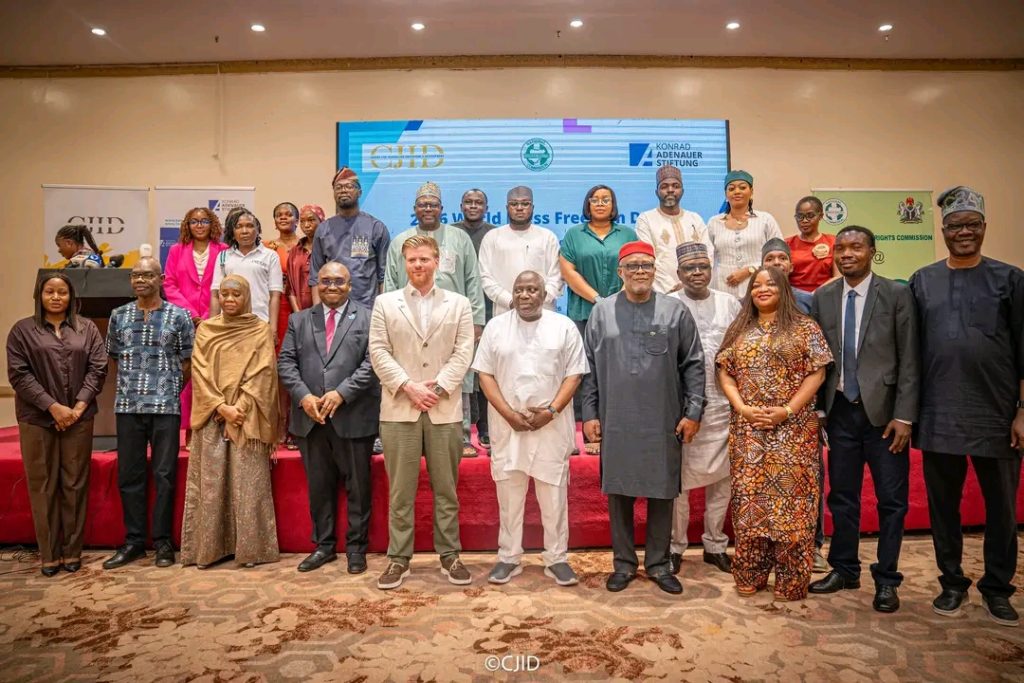
The event was convened by the Centre for Journalism Innovation and Development (CJID) in partnership with Konrad-Adenauer-Stiftung (KAS) and the National Human Rights Commission (NHRC), under the theme, “Shaping a Future at Peace: Promoting Press Freedom for Human Rights, Development, and Security.”
In his opening remarks, Moritz Sprenker, Resident Representative of Konrad-Adenauer-Stiftung in Nigeria, highlighted the critical role of a free and independent press in sustaining democratic accountability. He noted that press freedom is integral not only to media practice but also to the protection of human rights, transparency, and inclusive development.
Dapo Olorunyomi, Chief Executive Officer of CJID, described the press as “the lifeblood of every democracy,” emphasising its central role in ensuring informed citizen participation and institutional accountability. Representing the Executive Secretary of NHRC, Hilary Ogbonna reiterated that freedom of expression remains a foundational pillar of democratic governance and social stability.
Delivering a goodwill message on behalf of the Minister of Information and National Orientation, Dr. Dili Ezughah, Executive Secretary of the Nigerian Press Council, highlighted the importance of responsible journalism in advancing national development, strengthening transparency, and supporting security through informed public discourse.
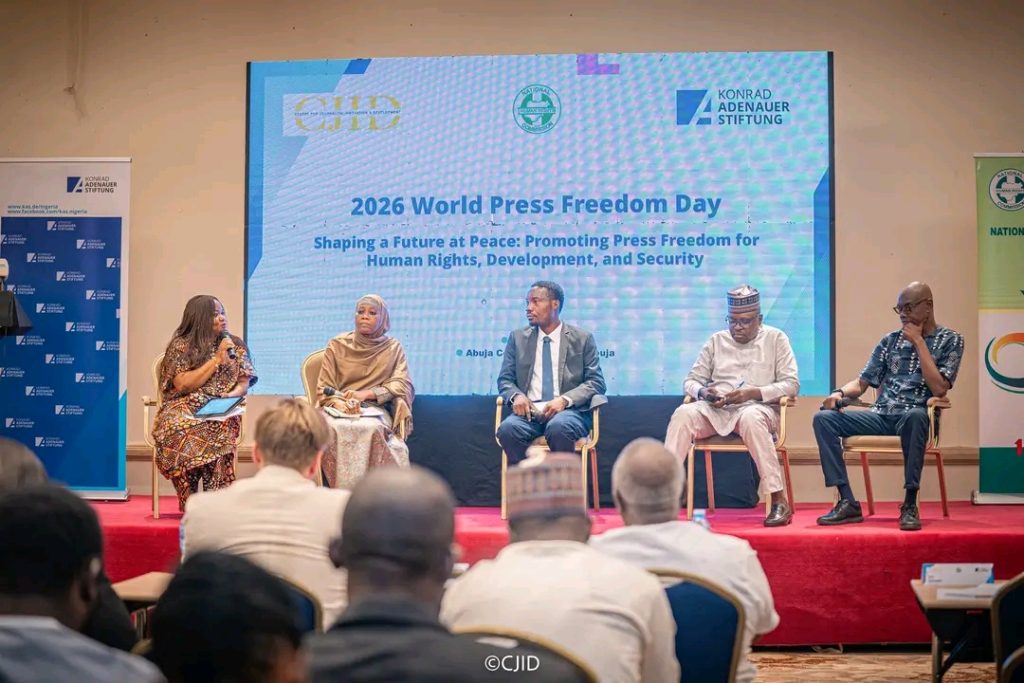
A panel session moderated by Busola Ajibola, Deputy Director of the Journalism Programme at CJID, examined the impact of investigative journalism on human rights protection and nation-building. Discussions focused on the rise of Strategic Lawsuits Against Public Participation (SLAPPs), constraints on media independence, and deficiencies in the enforcement of transparency and accountability frameworks across West Africa.
The event also featured the launch of the expanded CJID Press Attack Tracker (PAT), presented by Akintunde Babatunde, Executive Director of CJID. Since its establishment in 2017, the platform has documented 1,326 press freedom violations in Nigeria, including 28 fatalities, and has now been scaled to capture incidents across the region.
Capacity-building sessions formed a key component of the programme. Hauwa Shaffi Nuhu, Managing Editor at HumAngle, led a session on ethical, trauma-informed approaches to human rights reporting, while Christiana Longe, Project Manager for Press Freedom at CJID, facilitated training on legal first aid, equipping journalists with practical knowledge on managing legal risks, arrests, and engagements with law enforcement.
Participants collectively discussed the urgency of coordinated, multi-stakeholder responses to shrinking civic space, increasing safety risks, and restrictive regulatory environments affecting journalists across Africa.
The commemoration concluded with a renewed call for actionable strategies to strengthen press freedom, enhance journalist safety, and reinforce the nexus between independent media, human rights, and sustainable democratic development.
