


Report Highlights Rising Online Influence of Anti-Immigration Campaigns in South Africa
A recent analysis by the Institute for Security Studies (ISS) has drawn attention to the growing impact of anti-immigration campaigns in South Africa, particularly their expansion across social media platforms ahead of the country’s local government elections scheduled for November. The report indicates that organisers of the protests are increasingly relying on digital strategies to maintain visibility and engagement, including the circulation of provocative content and the use of historical references linked to prominent anti-apartheid figures.
According to the ISS, online materials promoting the movement often include videos depicting acts of violence against foreign nationals, as well as manipulated or artificially generated content designed to intensify public reaction. Some campaigners have also sought to frame their activities within the legacy of the liberation struggle, drawing controversial parallels with figures such as Nelson Mandela and Winnie Madikizela-Mandela in an effort to legitimise their messaging.
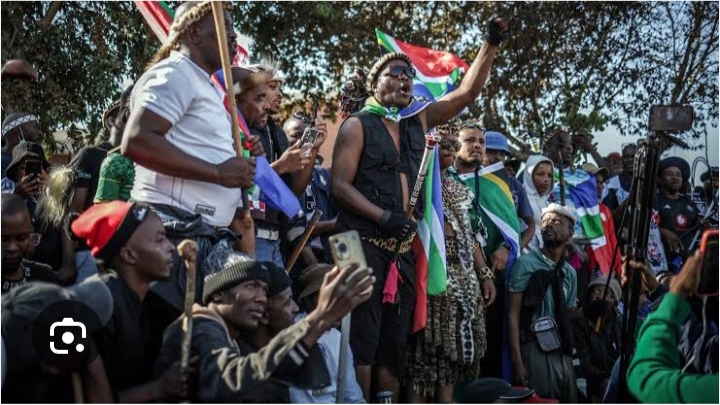
The report notes that these narratives have contributed to a surge in online discussions, with millions of mentions recorded in recent months, highlighting a strong link between digital mobilisation and real-world protests. In several instances, demonstrations have reportedly escalated into violence, prompting arrests and raising concerns about public safety and social cohesion.
Civil society groups and foundations associated with prominent historical figures have criticised the trend, warning that such rhetoric distorts the values of past leaders and risks encouraging division. They have called for greater accountability and urged the public to avoid directing grievances toward entire communities based on nationality or origin.
The ISS further observes that some activists have adopted roles resembling informal law enforcement, encouraging supporters to take action against perceived illegal activities involving foreign nationals. This development, alongside the spread of misleading information and unverified claims online, has heightened concerns about incitement and the weakening of trust in formal institutions.
While government agencies and advocacy organisations have engaged with social media companies over the issue, the report suggests that responses from major platforms have been limited. Experts also warn that reduced content moderation in recent years may be allowing harmful narratives to circulate more widely.
The ISS concludes that the convergence of online amplification, political tensions, and public frustration presents a complex challenge, with potential implications for stability, governance and social relations in South Africa as the election period approaches.
