


Chinese Humanoid Robots Break Human Records at Beijing Games
Chinese humanoid robots have taken centre stage at the World Humanoid Robot Games in Beijing, setting remarkable records in sprinting and high jump while also providing some spectacular moments of failure.
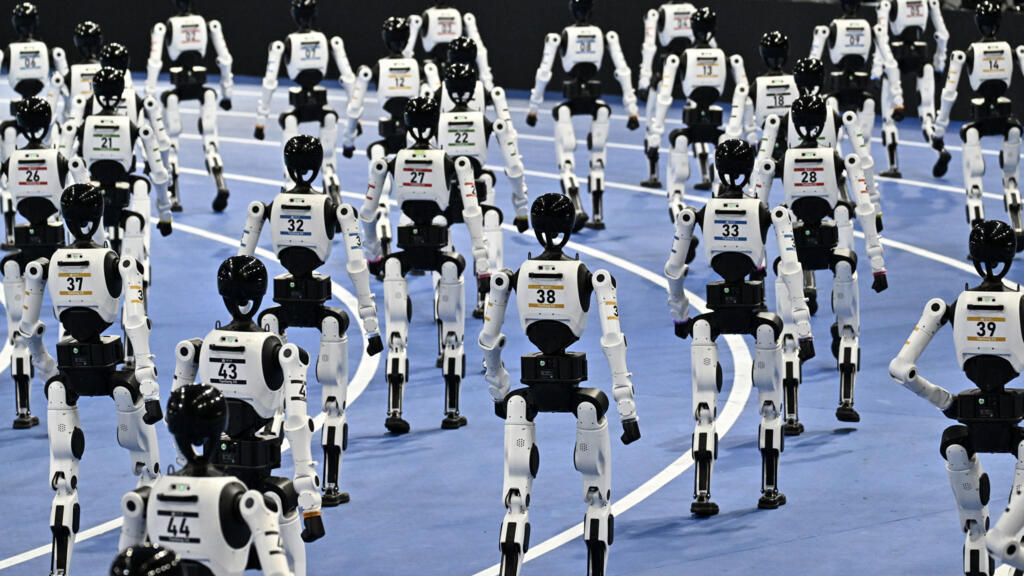
More than 2,000 robots are taking part in the five-day competition, which features over 1,000 contests across 51 events, including athletics, football, table tennis, weightlifting and tug-of-war. The event is part of China’s growing push to demonstrate advances in artificial intelligence and robotics.
One of the biggest highlights came in the 100-metre sprint, where a humanoid robot developed by Beijing-based X-Humanoid reportedly completed the race in 9.39 seconds. The performance was faster than the 9.58-second human world record set by Jamaican sprint legend Usain Bolt in 2009. Another X-Humanoid machine also recorded a 2.88-metre standing high jump, exceeding the human record of 2.45 metres set by Cuba’s Javier Sotomayor in 1993.
However, the impressive performances were accompanied by dramatic crashes, highlighting the limitations that still affect humanoid robots. Another robot from Chinese technology company Honor had earlier recorded 9.32 seconds during a trial run, reaching a top speed of 14.5 metres per second. Despite the rapid progress, experts say the technology remains largely at the demonstration and research stage and still faces major challenges before widespread use in everyday life.
The games, now in their second edition, have attracted participants from 16 countries, including China, Germany, Japan and the United States. They are being held at Beijing’s National Speed Skating Oval, the same venue used during the 2022 Winter Olympics. The competition comes as China and the United States intensify their technological rivalry, particularly over advanced robotics and artificial intelligence. With China producing a large share of the world’s humanoid robots, the event is serving not only as a sporting spectacle but also as a showcase of the country’s ambitions in the global robotics race.
