


Chinese investment in Africa surges 254% as Beijing shifts focus to energy and industry
Chinese investment announcements in Africa under the Belt and Road Initiative (BRI) surged 254% year-on-year to a record $33.5 billion in the first half of 2026, according to research by the Green Finance & Development Center and the University of Queensland Business School.
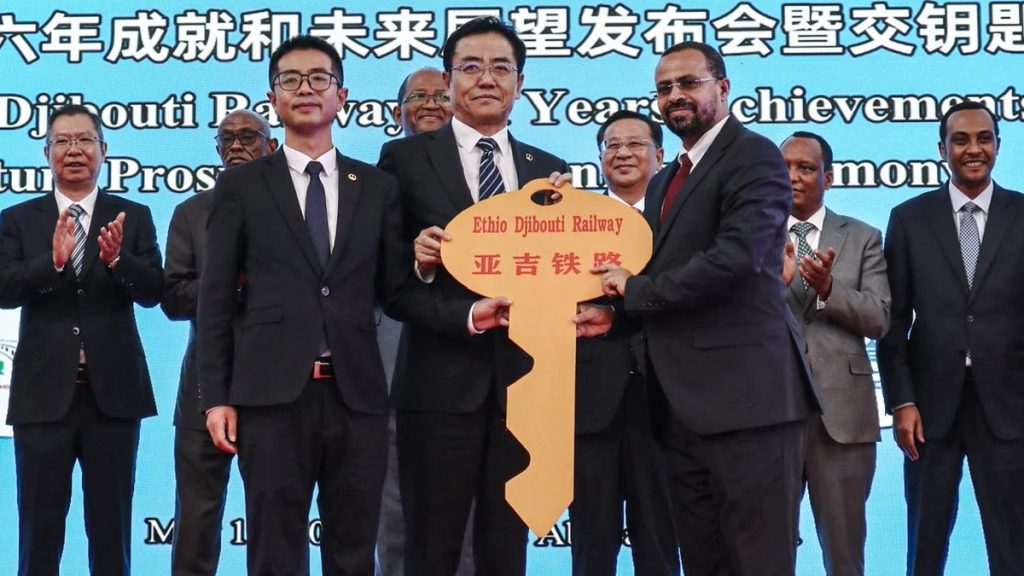
The increase marks a significant shift in China’s economic engagement with Africa. While Beijing has long been associated with financing and building roads, railways, ports and power infrastructure, Chinese companies are increasingly putting capital directly into energy, mining, mineral processing and manufacturing.
Africa accounted for about 67% of global Chinese BRI investment announcements during the first six months of the year. However, the figures refer to announced investments, not necessarily money already disbursed, meaning some projects could still change in size or fail to materialise.
Two countries accounted for much of the surge. Ethiopia attracted about $14.8 billion, largely through major renewable-energy and green-ammonia projects, while Egypt recorded about $12.2 billion, including a proposed $10 billion integrated steel complex.
The energy sector was the largest area of Chinese BRI engagement globally, with about $36.3 billion announced in the first half of 2026. Renewable energy accounted for 56% of that total, covering wind, solar, hydropower and waste-to-energy projects.
Chinese involvement in metals and mining also reached a record, with engagement valued at about $21.8 billion. Importantly, roughly 80% of activity in the sector involved processing facilities rather than simply extracting raw minerals.
The shift comes as African countries increasingly demand local processing and industrialisation, rather than exporting raw minerals and importing finished products. Countries including Zimbabwe and the Democratic Republic of Congo have introduced measures aimed at encouraging domestic processing and capturing more value from critical minerals.
For China, the strategy could provide access to Africa’s vast mineral resources while creating new manufacturing and supply-chain links. For African governments, the investment offers potential benefits including jobs, infrastructure, technology transfer and industrial capacity.
But it also raises questions about resource ownership, environmental standards, transparency and how much value ultimately remains in African economies. The growing Chinese presence therefore represents more than an investment boom—it could reshape the economic relationship between China and Africa from one centred largely on infrastructure construction to one increasingly focused on resources, energy and industrial production.
