


Insurgents Launch Coordinated Attacks Across Mali, Army Claims ‘Situation Under Control’
Armed insurgents carried out coordinated attacks across multiple regions of Mali, targeting military positions in the north, centre and south, as authorities insisted the situation is now under control.
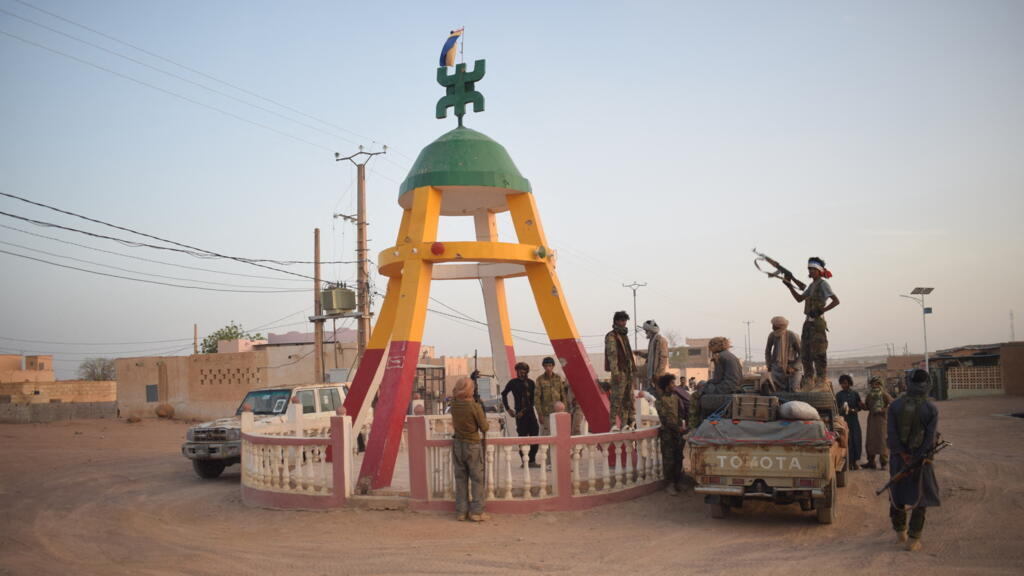
The Malian army said the assaults struck key locations including Anefis, Aguelhoc and Gao in the north, Sévaré in central Mali, and Kenioroba in the south, in what appears to be a synchronized operation.
Military officials reported that security forces repelled the attacks, killing at least 26 insurgents, while suffering limited casualties among pro-government fighters. The army added that the situation is “totally under control,” though security operations remain ongoing in affected areas.
Residents described intense fighting, with rocket fire, gunshots and explosions heard in cities like Gao and Sévaré, forcing civilians to remain indoors as troops sealed off streets and conducted sweeps for attackers.
A spokesperson for the Azawad Liberation Front (FLA) said the group participated in the offensive, possibly alongside Jama’at Nusrat al-Islam wal Muslimin (JNIM), an al-Qaeda-linked militant network, although JNIM has not formally claimed responsibility.
The latest violence underscores Mali’s deepening security crisis despite repeated assurances by military leaders who seized power in coups in 2020 and 2021. Analysts say the attacks reflect growing coordination between jihadist groups and separatist factions, which have intensified operations across the Sahel.
The incident follows a broader wave of offensives that began in April 2026, when allied insurgent groups launched large-scale attacks across the country, including in the capital Bamako, highlighting persistent instability and the state’s limited territorial control.
Mali remains one of the epicentres of insecurity in West Africa’s Sahel region, alongside Burkina Faso and Niger, where jihadist violence continues to spread despite shifting military alliances and increased reliance on foreign security support.
