


Rising Fertiliser Costs Drive Kenyan Farmers to Insect-made Alternatives
Rising fertiliser costs are pushing Kenyan farmers to explore alternatives to conventional chemical inputs, with worms and insects increasingly being used to produce organic fertiliser. The search for cheaper and more sustainable options comes as farmers face higher production expenses, soil degradation and changing weather conditions.
In Lari, about 50 kilometres from Nairobi, farmers are using redworms to turn food and crop waste mixed with cow dung into nutrient-rich vermicompost. The process involves dozens of composting beds containing thousands of worms, while large quantities of food waste are processed each month to produce fertiliser that can improve soil quality and support crop production during dry periods.
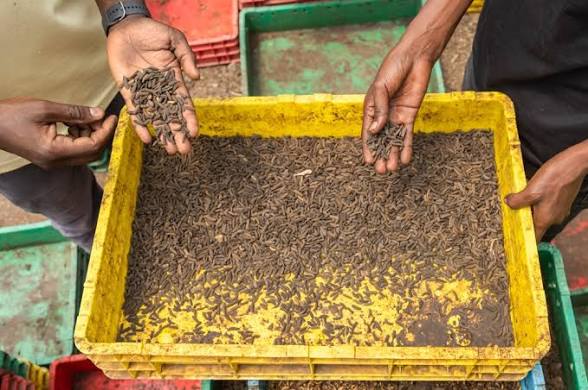
In Nakuru County, farmers are also using black soldier fly larvae to process food waste collected from markets. The larvae break down the waste and produce frass, an organic fertiliser, while the mature insects can be processed into animal feed. The approach allows farmers to convert discarded organic material into useful agricultural inputs while reducing their dependence on synthetic fertilisers.
The shift is taking place amid concerns over worsening soil health across East Africa. A 2025 Heinrich Böll Foundation report found that more than 40 per cent of the region’s soils had been degraded, while 32 per cent of Kenya’s cropland was classified as strongly acidic. Although insect- and worm-based fertilisers are not yet capable of replacing chemical fertilisers on a large industrial scale, they are emerging as alternatives as rising input costs and soil degradation push farmers towards more sustainable methods.
