


Sudan, South Sudan Revive Security Talks After Defence Minister’s Visit
Sudan and South Sudan have revived a key security dialogue after Sudanese Defence Minister Lt Gen Hassan Dawoud Kabron visited Juba for talks with senior South Sudanese officials, in a move aimed at easing tensions along their shared border and strengthening cooperation between the two neighbours.
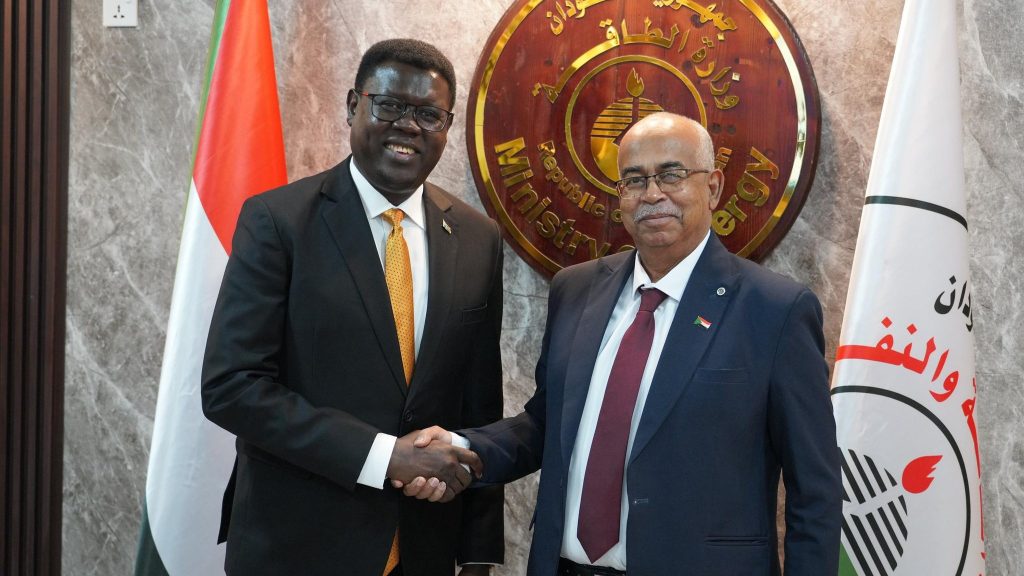
The visit, which took place from August 9 to 11, brought together a high-level Sudanese delegation that included representatives of the foreign ministry, intelligence service, police and border authorities. The discussions were conducted under the countries’ Political and Security Joint Mechanism, which had been largely inactive since Sudan’s war began in April 2023.
Kabron said the talks were aimed at reactivating agreements reached by previous joint committees, addressing outstanding issues and strengthening security, political and economic coordination between the two countries.
One of the most sensitive issues is Abyei, the oil-producing territory claimed by both Sudan and South Sudan.
The latest discussions produced agreements aimed at preventing unilateral actions that could change Abyei’s existing legal or administrative status. The two sides also discussed concerns over fighters and mercenaries moving across the border, including allegations that some South Sudanese fighters are involved in Sudan’s conflict alongside the Rapid Support Forces (RSF).
The resumption of the committee’s work is significant because it represents its first meetings since Sudan’s war erupted more than three years ago. The conflict between the Sudanese Armed Forces and RSF has created serious security pressures along the border and complicated relations between Khartoum and Juba.
Security cooperation also has major economic implications.
South Sudan depends heavily on oil exports, but much of its crude travels through pipelines across Sudan to the Red Sea, making the security and stability of Sudan vital to Juba’s economy.
The war in Sudan has repeatedly disrupted oil infrastructure and transportation routes. Strengthening security cooperation could therefore help protect the infrastructure needed for South Sudan’s oil exports while reducing the risk that instability spreads across the border.
The renewed dialogue comes as South Sudan itself faces worsening insecurity.
The UN and regional observers have warned that violence between government forces and opposition groups, alongside intercommunal and resource-related conflicts, is undermining the country’s fragile 2018 peace agreement. The situation is particularly concerning ahead of South Sudan’s planned December elections.
At the same time, South Sudan is receiving roughly 3,000 people every week fleeing the war in neighbouring Sudan, adding pressure to an already severe humanitarian crisis. More than 650,000 refugees and asylum seekers in South Sudan are also at risk of losing food assistance because of a major funding shortfall.
The renewed security talks therefore have implications beyond bilateral relations. If Khartoum and Juba can improve border coordination, address the movement of armed groups and manage the Abyei dispute, it could help reduce one source of instability in a region already facing overlapping wars, displacement and humanitarian emergencies.
