


UN Disposes of Somalia Mission Assets as U.S. Funding Cutoff Threatens AUSSOM
The United Nations is moving ahead with the disposal of assets belonging to its Somalia support operation as the mission faces a major funding challenge following the United States’ decision to end its financial backing for UN logistical support to the African Union’s security mission from next year.
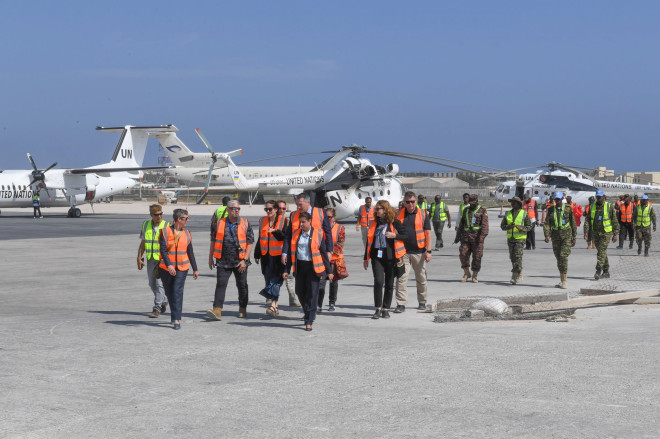
The United Nations Support Office in Somalia (UNSOS) provides critical logistical assistance to the African Union Support and Stabilisation Mission in Somalia, or AUSSOM, which has nearly 12,000 personnel supporting Somali forces in the fight against the al-Shabaab militant group.
UNSOS supplies or facilitates essential services including food, water, fuel, medical support, troop transportation, accommodation, engineering and communications.
The United States informed the African Union in July that it would no longer support UNSOS beyond the end of 2026. Washington said it had contributed nearly $2 billion to UNSOS and its predecessor missions but argued that Somalia had made insufficient progress toward independently taking responsibility for its security.
The decision has raised serious concerns over the future of AUSSOM. African Union officials have warned that losing UN logistical support could have major consequences for the mission’s ability to operate, while diplomats told Reuters that AUSSOM could struggle to continue unless another mechanism replaces the UN support structure.
UN documents show that UNSOS has an established preliminary property and asset-disposal plan, with an asset-disposal team responsible for identifying equipment for disposal and determining whether items should be sold, scrapped, destroyed or transferred to Somali authorities.
The UN has previously sold surplus equipment connected to its Somalia operations. A 2023 UN procurement notice, for example, sought buyers for vehicles, trailers, generators and electrical and water-treatment equipment in Mogadishu and Kismayo.
However, the current asset sales should not automatically be interpreted as the UN abandoning Somalia. UNSOS’s mandate remains in force for 2026, while the UN Security Council has authorised continued logistical support to AUSSOM through the end of the year.
If alternative financing is not secured, AUSSOM could face shortages of fuel, food, transportation and medical evacuation capabilities. That could reduce the African Union force’s ability to support Somali troops against al-Shabaab, which remains capable of conducting attacks and controlling territory in parts of the country.
For Somalia, the funding dispute therefore goes beyond the sale of vehicles or other UN property. It could affect the country’s broader security transition at a time when the government is still heavily dependent on international assistance.
