


High Fuel Costs Drive Africa’s Shift Towards Chinese Solar Technology
Rising fuel costs and persistent electricity shortages are accelerating Africa’s shift towards solar energy, with cheaper Chinese panels and batteries making renewable power increasingly accessible to households, businesses and governments across the continent.
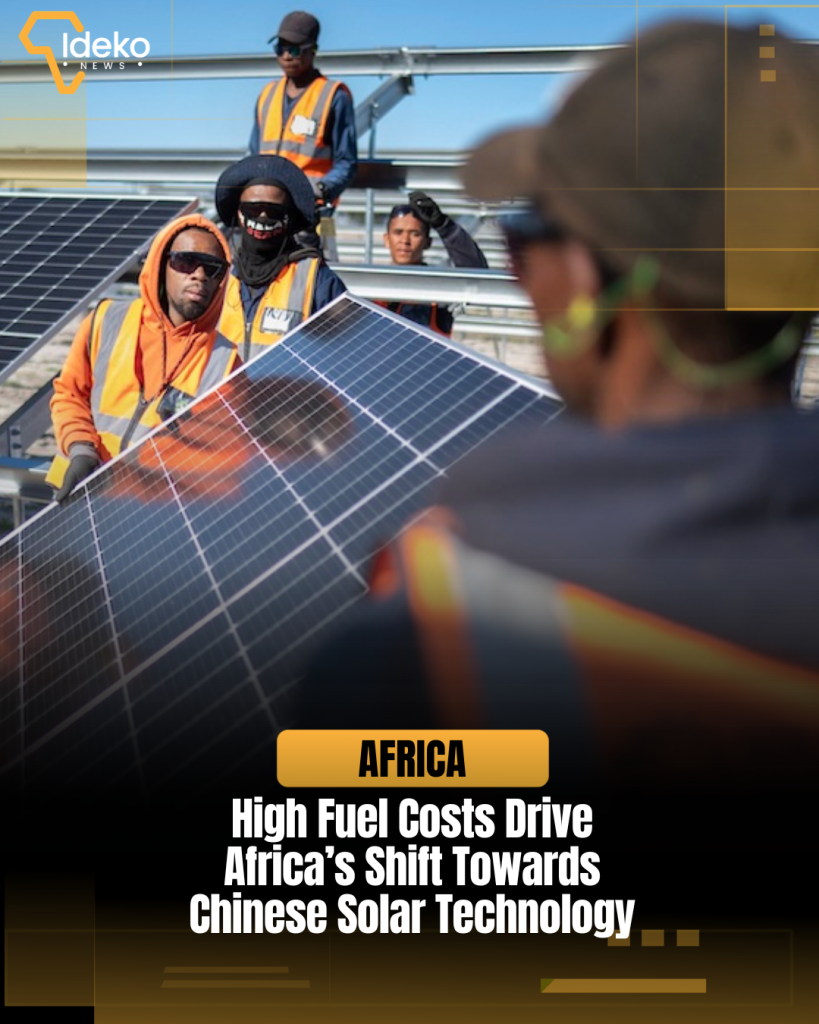
Africa’s solar capacity expanded by 54 per cent in 2025, adding about 4.5 gigawatts, as falling prices for Chinese-made solar equipment helped lower the cost of switching to renewable energy. For countries heavily reliant on imported fuel and struggling to provide reliable electricity, the technology offers a way to reduce both energy costs and dependence on fossil fuels.
Nigeria illustrates the scale of the challenge. With the national grid providing limited daily electricity, millions of generators are used by households and businesses, consuming diesel and petrol at an estimated annual cost of about $12 billion. The growing availability of Chinese solar systems is therefore creating an alternative for consumers seeking more dependable and cheaper electricity.
China’s role extends beyond supplying equipment, as Chinese companies are also involved in financing and constructing renewable energy projects across Africa, including solar plants, wind farms and hydropower facilities. Investments in battery manufacturing in Morocco further point to Beijing’s expanding presence across the continent’s emerging clean-energy supply chain.
The shift could also have wider consequences for the global energy market. As African countries increasingly adopt solar technology to meet their electricity needs, demand for imported oil could gradually weaken, creating a potential challenge for oil-producing countries and for policies aimed at expanding fossil-fuel production.
