


Nigeria’s Domestic Gas Supply Crosses 2 Bcf/d
Nigeria’s domestic gas supply has crossed 2 billion cubic feet per day (Bcf/d) as the Federal Government pushes to increase deliveries to power plants, industries and other users in an effort to ease energy constraints and support economic growth.
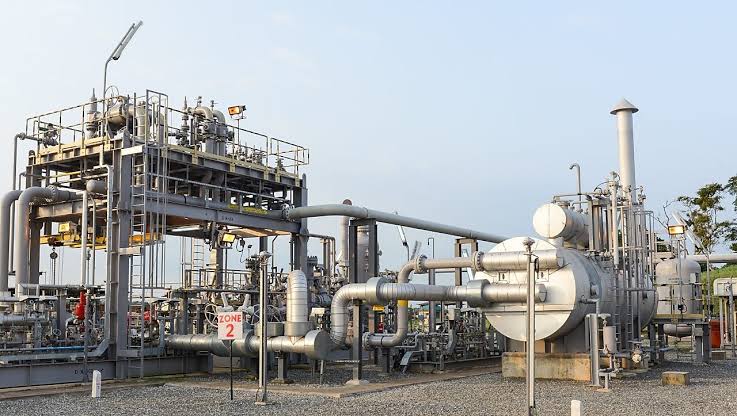
Minister of State for Petroleum Resources (Gas), Ekperikpe Ekpo, said total gas production has risen to 7.5 Bcf/d, from about 6.8 Bcf/d in 2023. Nigeria’s proven gas reserves have also increased to 215.19 trillion cubic feet, from 208.83 trillion cubic feet.
The government is targeting 10 Bcf/d of gas production by 2027 and 12 Bcf/d by 2030, with the additional supply expected to support electricity generation, manufacturing, fertiliser and petrochemical production, transportation and liquefied natural gas exports.
A major part of the expansion is the Obiafu-Obrikom-Oben (OB3) gas pipeline, which has now reached full completion and is being prepared for first gas. The 130-kilometre pipeline can transport up to 2 Bcf/d and is expected to unlock more than 500 million standard cubic feet per day of additional domestic supply. The Ajaokuta-Kaduna-Kano (AKK) pipeline is also about 95 per cent complete, according to the minister.
The government says ₦671 billion deployed through the Midstream and Downstream Gas Infrastructure Fund has attracted about ₦1.6 trillion in private investment across 31 projects and 205 infrastructure assets. These projects are projected to add about 475 million standard cubic feet per day to domestic supply when operational.
However, the supply milestone does not by itself guarantee reliable electricity or industrial growth. NUPRC data showed average domestic gas delivery of 2.05 Bcf/d through June 2026, against allocated domestic delivery obligations of 3.16 Bcf/d, highlighting continuing challenges in getting available gas to end users.
The challenge for Nigeria now is whether rising production and new infrastructure can translate into more reliable power, lower energy costs and stronger industrial output rather than simply higher gas-production figures.
