


Over 900 Arrested During anti-migrant Protests
South African police have arrested more than 900 people following nationwide anti-migrant protests that were largely peaceful but turned violent in several areas, authorities said Wednesday.
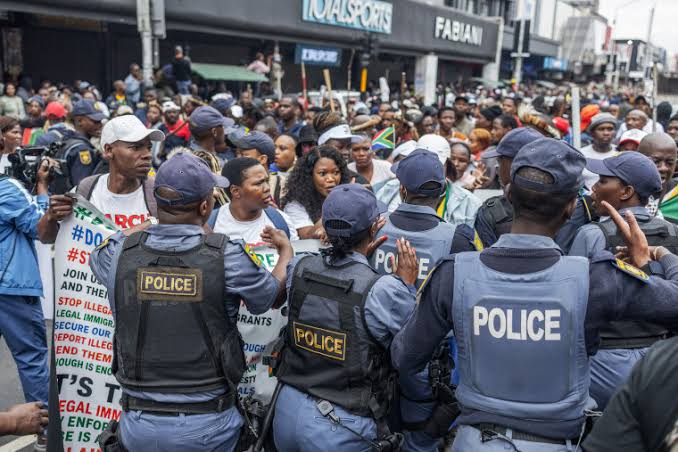
The protests, held across multiple cities on June 30, were part of a coordinated campaign by anti-immigration groups demanding that undocumented migrants leave the country. While officials reported that 108 out of 120 marches proceeded without incident, at least 12 required police intervention after outbreaks of looting and public disorder.
Police said those arrested face a range of charges, including immigration violations, public violence, robbery, and harbouring undocumented migrants. Security forces, including the military, were deployed in several provinces to restore order and prevent further escalation.
Violence was reported in parts of Johannesburg and Durban, where shops—many owned by foreign nationals—were looted. One person was shot dead in Alexandra township during the unrest, while others were injured in separate incidents. Authorities also confirmed the death of a foreign national in Durban, who reportedly jumped from a building amid fears of attack.
The demonstrations followed months of rising tension and xenophobic sentiment, with migrants frequently blamed for unemployment and pressure on public services—claims analysts say are not supported by evidence.
In the lead-up to the protests, thousands of foreign nationals fled their homes or sought refuge, fearing violence. Several African countries, including Nigeria and Zimbabwe, have begun evacuating citizens or assisting those seeking to return home.
South African President Cyril Ramaphosa has condemned the violence, reiterating that immigration enforcement remains the responsibility of the state and warning against vigilantism. Human rights organisations have also criticised the attacks, describing them as part of a broader pattern of xenophobic violence in the country.
The unrest marks one of the largest anti-migrant crackdowns in recent years and has renewed concerns over public safety, regional relations, and the treatment of foreign nationals in Africa’s most industrialised economy.
